As a licensed DPT and Amazon Associate, I earn from qualifying purchases at no extra cost to you. I only recommend products I’ve personally vetted.
Whether you walk outdoors, use a treadmill, or get your steps in on a walking pad, the right footwear can make your walking routine more comfortable. But the “best” walking shoe isn’t the same for everyone. Your walking surface, foot shape, comfort preferences, and any existing knee or lower-extremity issues should all be considered.
Choosing the right shoes is one of the most important steps when starting a walking or workout routine. Wearing improper footwear can lead to discomfort, pain, and even injury. As a licensed Doctor of Physical Therapy with clinical orthopedic experience, now working in school-based PT, I always emphasize the importance of proper support, especially for individuals with knee or hip pain or beginners who are just getting started.
Why Proper Shoes Matter
Supportive shoes help absorb impact, improve alignment, and reduce stress on your joints. Whether you’re walking for exercise or starting a beginner workout routine, the right footwear can make a significant difference in comfort and performance.
Poor footwear can contribute to issues such as foot pain, knee discomfort, hip pain, and even low back strain. Investing in a good pair of walking shoes is one of the simplest ways to protect your body and stay consistent.
What Makes a Shoe “DPT-Approved” for Knee Pain?
What I Personally Look for in a Walking Shoe
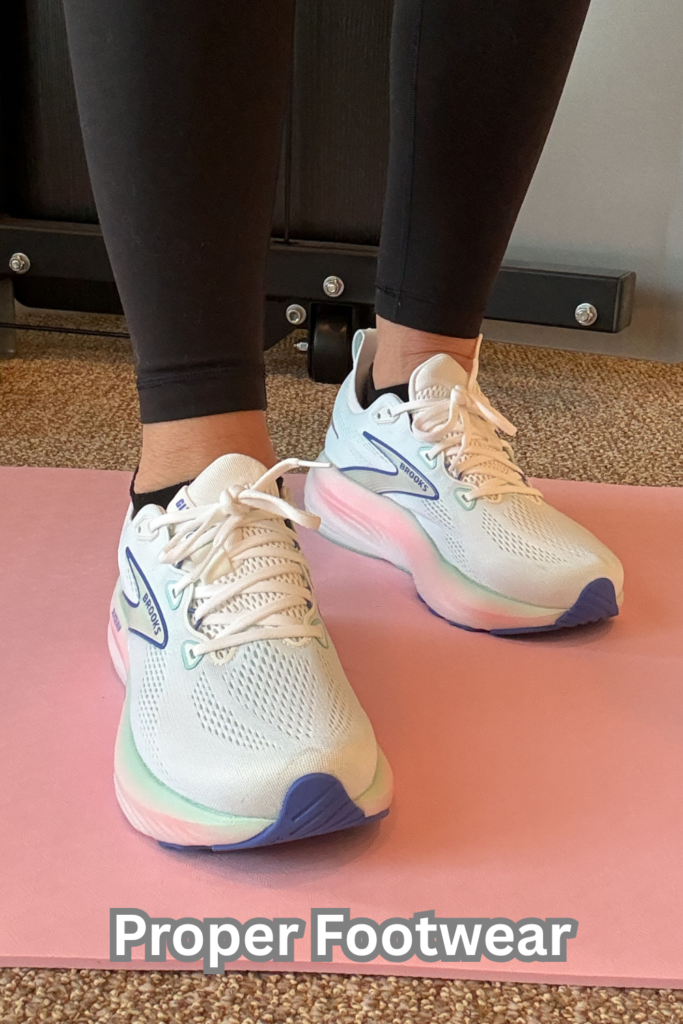
When recommending walking shoes, I generally look for a combination of support, cushioning, stability, and overall comfort—especially for individuals dealing with knee discomfort or beginning a walking program.
Some features I often consider include:
• Moderate cushioning to help reduce impact stress
• Stable support without feeling overly soft or unstable
• A comfortable toe box that allows natural foot movement
• The ability to accommodate inserts or orthotics if needed
Outdoor Walking Shoes vs. Walking Pad Shoes: Does It Matter?
The best walking shoe for you may depend on where you’re walking.
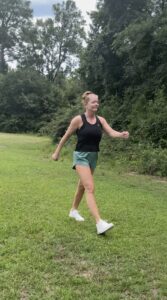
Walking outdoors and walking on a walking pad are not exactly the same. Outdoor walking exposes your feet to changing surfaces, weather, pavement, uneven terrain, and potentially wet or slippery conditions. A walking pad provides a relatively flat, predictable surface in a controlled indoor environment.
That means you don’t necessarily need the same shoe for every type of walking.
Best Shoes for Outdoor Walking
If you’re walking on sidewalks, pavement, neighborhood roads, trails, or varied terrain, look for a shoe that provides:
- Good traction for the surface you’re walking on
- A durable outsole appropriate for outdoor use
- Comfortable cushioning that works for your individual needs
- Adequate stability and support
- A secure fit that keeps your foot from sliding inside the shoe
- Enough room in the toe box for your toes to move comfortably
If you frequently transition between pavement and gravel or light trails, a more versatile road-to-trail shoe may also be worth considering.
PT-Recommended Outdoor Walking Options
Brooks Ghost 18 — A versatile everyday walking/running shoe with cushioning and a durable outsole that can work well for pavement and neighborhood walking.
Brooks Adrenaline GTS 25 — An option to consider if you prefer a more structured, supportive feel while walking.
HOKA Clifton 10 — A lightweight, cushioned option for people who prefer a softer, more cushioned walking experience.
HOKA Bondi 9 — A highly cushioned option that may appeal to walkers who spend a lot of time on hard surfaces.
Merrell Moab Speed 2 or Salomon X Ultra 5 — Consider these if your walking routine regularly includes gravel paths, trails, or more varied outdoor terrain where additional traction may be useful.
Important: A shoe that works well for one person may not work well for another. Your foot shape, gait, comfort preferences, walking surface, and any existing foot or lower-extremity issues should all be considered.
Best Shoes for Walking Pads
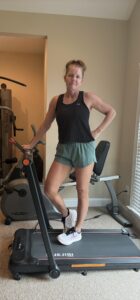
Walking pads and treadmills provide a more predictable environment than outdoor walking. Because the belt is generally flat and the walking surface is consistent, you may prefer a shoe that feels lightweight, comfortable, flexible, and secure rather than a heavy outdoor or trail shoe.
When choosing a shoe for a walking pad, consider:
- Lightweight construction
- Comfortable cushioning
- A secure fit
- Adequate flexibility for walking
- A clean, non-marking outsole when appropriate
- A sole that feels stable on the walking belt
- A comfortable toe box
You don’t necessarily need a specialized “walking pad shoe.” A comfortable athletic shoe that fits well and feels stable on the belt may work perfectly well.
PT-Recommended Walking Pad Options
ASICS GEL-CUMULUS 28 — A versatile option for people who want cushioning and a comfortable feel without choosing a particularly heavy shoe.
ASICS DYNABLAST 5 — A lighter option that may appeal to people who prefer a more flexible, responsive feel.
On Cloud 6 — A lightweight everyday option that can work well for indoor walking and other low-impact activities.
On Cloudmonster 3 — A more cushioned option for walkers who prefer a softer, more substantial feel.
Altra Solstice XT — A lower-profile option with a roomier toe box that may appeal to people who prefer more space for their toes.
| Considerations | Outdoor Walking | Indoor Walking / Treadmill / Walking Pad |
|---|---|---|
| Main considerations | Traction, durability, surface changes | Comfort, flexibility, secure fit |
| Terrain | Pavement, sidewalks, trails | Flat, predictable belt/surface |
| Weather | May encounter rain/wet surfaces | Weather-independent |
| Shoe preference | Durable outsole, appropriate traction | Lightweight, comfortable, flexible |
| Best for | Outdoor walkers & varied terrain | Home/gym walkers |
What About Barefoot or Minimalist Shoes?
Some people prefer a more natural-feeling, lower-profile shoe for indoor walking. However, minimalist or barefoot-style shoes are not automatically better for your knees or feet.
If you’re accustomed to a more cushioned or supportive shoe, suddenly switching to a minimalist shoe can change the demands placed on your feet and lower extremities.
If you want to try a lower-profile or minimalist shoe, transition gradually and pay attention to how your feet, ankles, knees, and hips respond.
Do You Need Different Shoes for Outdoor Walking and a Walking Pad?
Not necessarily.
If you have a comfortable pair of athletic shoes that fits well, provides appropriate traction, and feels good on both surfaces, you may not need separate shoes.
However, having different shoes can make sense if your walking routines are very different.
For example:
Outdoor walking:
Prioritize traction, durability, weather considerations, and the level of cushioning and stability you prefer.
Walking pad:
Prioritize comfort, a secure fit, appropriate cushioning, flexibility, and a sole that feels stable on the belt.
The most important factor is still how the shoe fits and feels on your feet.
There is no single “best” walking shoe for everyone.
A Note About Knee Pain
If you’re searching for walking shoes because your knees hurt, remember that shoes are only one piece of the puzzle.
Knee pain can have many contributing factors, including changes in activity level, strength, mobility, training volume, movement patterns, and previous injury. A new pair of shoes may make walking more comfortable, but it won’t necessarily address the underlying cause of persistent knee pain.
If your knee pain is persistent, worsening, associated with an injury, or interfering with your normal activities, consider having it evaluated by a qualified healthcare professional.
Changing shoes may make walking more comfortable, but a new pair of shoes isn’t necessarily going to fix the underlying cause of knee pain.
If your knee pain is persistent, worsening, associated with an injury, or interfering with your normal activities, consider having it evaluated by a qualified healthcare professional.
My PT Approach
Rather than asking, “What is the best walking shoe?” I recommend asking:
“What shoe fits my foot, feels comfortable, matches my walking environment, and allows me to walk consistently?”
That’s usually a much better starting point.
👟 Want to See All of My PT-Approved Walking Essentials?
Looking for more than just walking shoes? Browse my curated Amazon Storefront to see the shoes I personally wear, plus my favorite walking, strength training, mobility, and recovery tools that support an active lifestyle.
As an Amazon Associate and Amazon Influencer, I earn from qualifying purchases. Thank you for supporting Total Body Wellness at no additional cost to you.
DPT Tips for Choosing the Right Shoe
Choosing the right shoe can make a significant difference in your comfort and long-term success with exercise.
- Replace shoes regularly, especially if they begin to feel worn out
- Avoid using old or unsupportive shoes for exercise
- Try shoes on later in the day when your feet are slightly swollen for a better fit
- Walk around in the shoes before purchasing to ensure comfort
- Prioritize comfort and support over appearance
The right shoe should feel supportive and comfortable from the start.
When to Replace Your Shoes (DPT Rule)
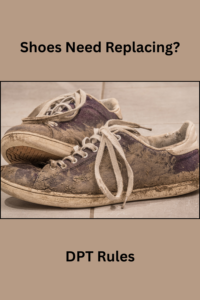
Over time, even supportive shoes lose cushioning and stability. If your shoes begin feeling less supportive, overly flexible, or uncomfortable during walks, it may be time for a replacement.
Many walking shoes need replacing after several months of consistent use, depending on activity level and mileage.
If you notice new discomfort in your knees, hips, or back, worn-out footwear may be one factor worth considering.
Ready to Continue Your Journey?
Supportive shoes are only one piece of the puzzle. Building strength, improving mobility, and staying consistent with movement are equally important for long-term joint health.
If you’re looking for a simple, beginner-friendly plan to help you get started safely at home, my 7-Day Beginner-Friendly Strength, Stability & Recovery Program combines low-impact workouts, mobility work, and guided strength training designed to support confidence and consistency.
Ready to build your home setup? → See my DPT-Recommended Best Home Gym Equipment for Beginners – the exact $182 system I used with patients, organized by rehab phase.
Need the beginner exercises first? → Follow Knee Pain Relief: 4 Simple Exercises That Actually Help with step-by-step progressions from bodyweight to ankle weights to dumbbells.
Tried resting but pain came back? → Understand why in Why Your Knee Still Hurts Even After Rest. Covers muscle weakness, mobility deficits, and when you need to upgrade from bodyweight to equipment.
Get my Beginner PT Workout Plan to help you get started safely and effectively.
This content is for educational purposes only and is not intended as medical advice. Consult a healthcare professional for individualized recommendations.
Pingback: Knee Pain Relief: Simple Exercises That Actually Help (PT Recommended Equipment for This Workout) – Total Body Wellness
Pingback: Why Your Knee Still Hurts (Even After Rest) – Total Body Wellness
Pingback: Best Home Gym Equipment for Beginners – Total Body Wellness
Pingback: Rebuild Your Strength Safely: A 7-Day PT-Designed Home Workout Routine – Total Body Wellness
Pingback: How to Stay Consistent With Exercise (Even When You’re Busy) – Total Body Wellness
Pingback: Why Balance Training Matters After 40 (PT-Approved Guide) – Total Body Wellness
Pingback: 10 PT-Approved Home Safety Tips to Help Prevent Falls – Total Body Wellness