This post may contain affiliate links, which means I may earn a commission at no extra cost to you.
If your knee still hurts even after taking time to rest, you’re not alone. Many people assume that pain will go away on its own with rest, but that’s not always the case.
I have worked with patients who become frustrated when their pain lingers despite doing “all the right things.” The truth is, there are several reasons why knee pain can persist—and understanding them is the first step toward recovery.
Rest Alone Isn’t Always the Solution
While rest can be helpful in the early stages of pain or injury, it’s not always enough to fully resolve the issue.
In my clinical experience, some persistent knee pain is related to factors such as movement patterns, muscle weakness, mobility limitations, training load, or how quickly someone returns to activity. However, knee pain can have many different causes, including injuries that may require professional evaluation. Identifying the likely cause is an important first step toward choosing the right approach.
The goal isn’t just to rest—it’s to restore proper movement and support around the knee.
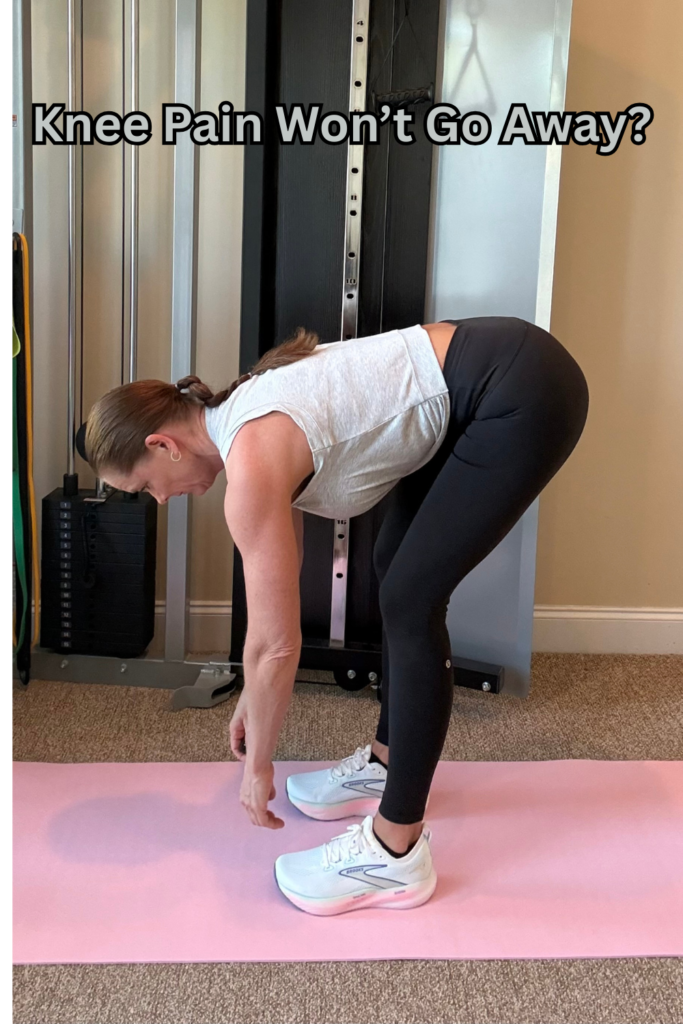
When Rest Isn’t Enough: Make Sure There’s Not an Injury
Resting your knee and gradually returning to activity may be appropriate for some types of knee pain, but persistent pain should not automatically be treated as a strength or movement problem.
If your knee pain began after a specific injury, such as a fall, twist, collision, or sudden change in activity—or if you have significant swelling, instability, locking or catching, inability to bear weight, or symptoms that are worsening—it’s important to have the knee evaluated by a healthcare professional before trying to progress your exercise program.
The goal isn’t simply to “push through” pain after resting. First, make sure there isn’t an injury or other condition that needs to be addressed. Once serious or significant injury has been ruled out and you’re cleared for activity, a gradual return to movement, strength, mobility, and functional activity may be an important part of recovery.
Recovery Doesn’t Mean Complete Rest
Recovery is not the same thing as doing nothing.
For many people, recovery involves finding the right balance between reducing irritation, maintaining appropriate movement, rebuilding strength, and gradually increasing activity as the body tolerates it. Sleep, hydration, mobility, strength training, and appropriate recovery strategies can all be part of that process.
If you’re trying to understand how recovery fits into an active lifestyle, read my guide Why Recovery Matters More After 40 for a deeper look at how strength, movement, and recovery work together.
Common Reasons Your Knee Pain Isn’t Going Away
There are several reasons why knee pain may continue, even after rest:
Muscle Weakness – Extended rest can contribute to muscle weakness and reduced support around the knee, which may make returning to activity more difficult.
Movement Patterns – The way you walk, squat, climb stairs, or exercise can influence how forces are distributed through the knee and surrounding joints.
Lack of Mobility – Limited mobility in the knee, hip, or ankle can affect how you move and place additional demands on other parts of the leg. Rather than assuming that tight muscles are the direct cause of knee pain, consider whether mobility limitations are changing your movement patterns and making certain activities more difficult or uncomfortable.
Returning to Activity Too Quickly – Feeling better doesn’t always mean your knee is ready for your previous level of activity. Jumping from rest directly back into your old workout, walking distance, or activity level can sometimes aggravate symptoms. Instead, think about gradually rebuilding your tolerance for the activities you want to return to.
Recovery is part of that process. Adequate sleep, hydration, nutrition, mobility, appropriate strength training, and rest between challenging activities can all help support your ability to recover and adapt.
Incomplete Recovery – Sometimes pain improves with rest or basic exercise, but strength, endurance, mobility, or tolerance for your usual activities hasn’t fully returned. Feeling better doesn’t always mean the knee is ready for your previous level of activity.
An Injury or Other Condition That Needs Evaluation – If your knee pain started after a specific injury or is accompanied by significant swelling, instability, locking or catching, difficulty bearing weight, or worsening symptoms, it’s important to have it evaluated rather than assuming more exercise or rest will resolve the problem.
Identifying the likely cause of your knee pain is an important first step toward choosing the right approach.aggravate symptoms
Incomplete Recovery – You plateaued at bodyweight exercise and pain decreased but weakness remains.
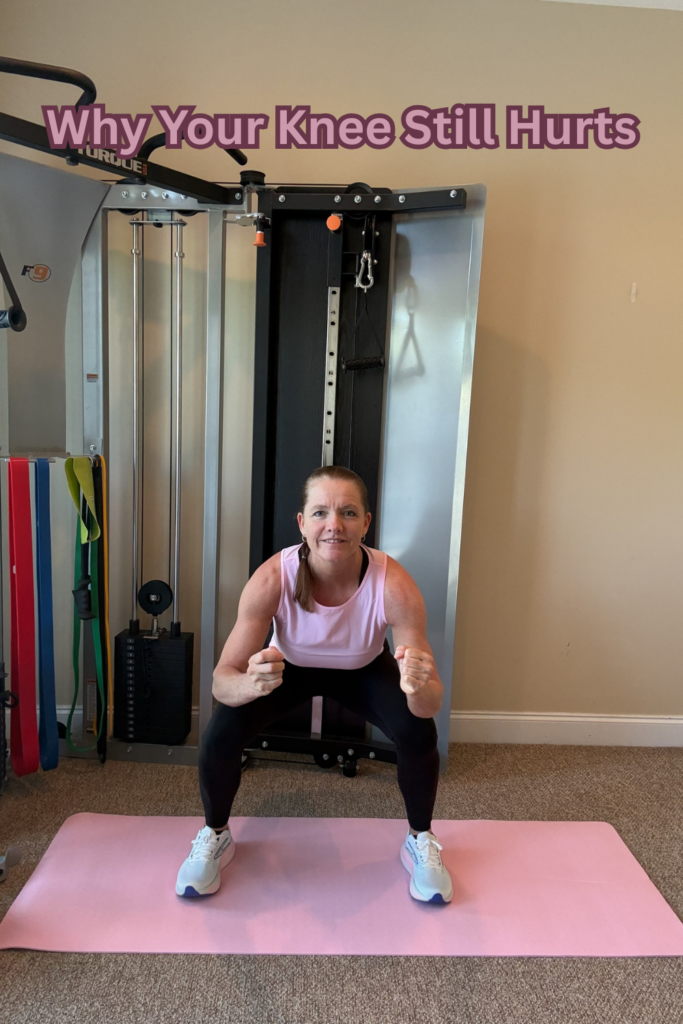
PT Tips for Managing Knee Pain
- Avoid pushing through sharp or increasing pain
- Focus on proper form during all movements
- Start with low-impact activities when returning to exercise
- Be patient—recovery takes time and consistency
- Address the entire leg, not just the knee
Treating the body as a whole is key to long-term success.
Want a structured plan to help you start moving again safely?
My 7-Day Beginner-Friendly Strength, Stability & Recovery Program combines low-impact strength training, mobility work, and beginner-friendly guidance designed to help you build confidence and consistency at home.
Helpful Tools That May Support Recovery:
Resistance bands may help strengthen the structures around the knee. Amazon Basics Resistance Bands –
A foam roller may help lengthen tight muscle structures that can abnormally pull on the lower extremity causing imbalance and pain / injury. A simple foam roller can be a helpful, low-cost tool to support daily mobility work. The Amazon Basics foam roller
Using an exercise mat can prevent discomfort while stretching and exercising on the floor. Amazon Basics 1/2″ Thick Exercise Mat
👟 Shop My PT-Approved Walking & Low-Impact Cardio Essentials
Finding ways to stay active with knee discomfort can feel challenging, but the right tools can help make movement more comfortable and approachable. As a Doctor of Physical Therapy, I believe that building strength, improving confidence, and choosing activities you can consistently perform are key to long-term success.
I have curated my Amazon Storefront with low-impact fitness essentials that I personally use and recommend, including walking equipment, resistance tools, and beginner-friendly workout gear to help support an active lifestyle.
As an Amazon Associate and Amazon Influencer, I earn from qualifying purchases. Thank you for supporting Total Body Wellness at no additional cost to you.
Continue your Recovery Journey:
Want a simple low-impact workout plan you can follow at home?
→ Start the 7-Day Beginner-Friendly Strength, Stability & Recovery Program
Looking for beginner-friendly exercises to support knee strength and mobility? → Follow Knee Pain Relief: 4 Simple Exercises That Actually Help with step-by-step progressions from bodyweight to ankle weights to dumbbells.
Building a home setup for safer workouts? DPT-Recommended Home Gym Setup. Same equipment I used during clinical rotations, now with school-based PT applications.
Need supportive walking shoes? Read Best Walking Shoes for Knee Pain: DPT Recommendations 2026
This content is for educational purposes only and is not intended as medical advice. Consult a healthcare professional for individualized recommendations.
Pingback: Knee Pain Relief: Simple Exercises That Actually Help (PT Recommended Equipment for This Workout) – Total Body Wellness
Pingback: Best Home Gym Equipment for Beginners – Total Body Wellness
Pingback: Best Walking Shoes for Knee Pain: DPT Recommendations 2026 – Total Body Wellness
Pingback: 7-Day Beginner Strength & Recovery Reset – Total Body Wellness
Pingback: How to Stay Consistent With Exercise (Even When You’re Busy) – Total Body Wellness