As a licensed DPT and Amazon Associate, I earn from qualifying purchases at no extra cost to you. I only recommend products I’ve personally vetted.
Lower back pain is one of the most common issues people face, especially when starting a new workout routine. The good news is that the right exercises can help reduce pain, improve strength, and prevent future injury. As a Doctor of Physical Therapy, I recommend starting with simple, controlled movements that support your spine and build core stability.
Why Exercise Helps Lower Back Pain
Regular exercise may help:
- Improve blood flow to muscles and joints.
- Reduce stiffness after sitting or standing.
- Build strength in the muscles that support your spine.
- Improve balance and coordination.
- Increase endurance for daily activities like walking, cooking, gardening, and standing.
Build Endurance—Not Just Strength
Many people focus on getting stronger but forget that their muscles also need endurance.
The muscles that support your spine are designed to work for long periods throughout the day. If they fatigue quickly, your back may begin to feel tired during activities like cooking, shopping, standing at work, or watching your child’s sporting event.
Improving endurance comes from consistent walking, regular strength training, and gradually increasing the amount of time your body spends performing everyday activities.
Why Does My Low Back Feel Tired After Standing?
Many people tell me, “My back doesn’t really hurt—it just feels tired after I’ve been standing for 10 or 15 minutes.”
This sensation is often different from sharp pain. When we stand in one position for a long time, the muscles that help support our spine work continuously to keep us upright. Over time, those muscles can fatigue, making your low back feel heavy, tired, or achy.
Standing itself isn’t usually the problem. More often, it’s standing still.
Small movement breaks, shifting your weight, and building strength in your core and hips can often make standing more comfortable over time.
Quick Tips if Standing Makes Your Back Feel Tired
If you’re standing for long periods:
- Shift your weight from one leg to the other.
- Try a staggered stance instead of standing with both feet together.
- Avoid locking your knees.
- Take short walking breaks whenever possible.
- Build strength in your glutes and core.
Small position changes throughout the day can reduce muscle fatigue and make standing more comfortable.
Beginner Exercises to Build the Foundation for a Stronger Back
- Pelvic Tilts- Lie on your back with your knees bent and feet flat on the floor. Gently rock your pelvis backward to comfortably flatten your lower back toward the floor. This exercise improves awareness of how your pelvis and lower back move together while gently activating your deep abdominal muscles. Hold the position for 5 seconds, then relax. Repeat 10 times.
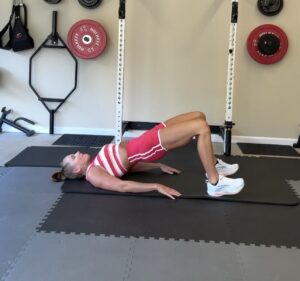
- Glute Bridges – While in the same position, lift your hips off the ground while keeping your core engaged. To engage your core, think about pulling your belly button back towards your spine. This will activate your core. Repeat 10 times.
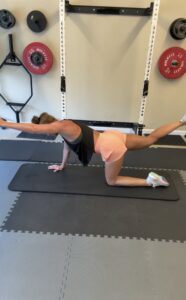
- Bird Dog – While on your hands and knees (all 4’s), extend opposite are and leg at the same time while still engaging your core. If this causes lower back pain, discontinue and revert back to pelvic tilts and glute bridges. Repeat 10 times each side.
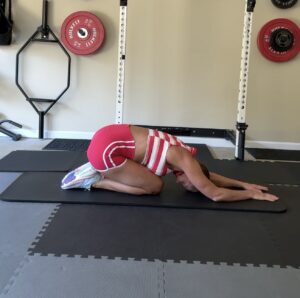
- Child’s Pose Stretch – Sit back on your heels and stretch your arms forward on the ground. Then you can gently stretch you low back and relieve tension. If this causes lower back pain, discontinue and revert back to pelvic tils and glute bridges.
When Stretching Alone Isn’t Enough
Stretching can help reduce stiffness and temporarily relieve tension, but if your lower back discomfort keeps returning, you may need to build more stability and control through your core muscles.
Your core acts like your body’s natural support system and works together with your back and hips to help support movement. If that support system is weak, stretching alone may not address the underlying issue.
When stretching alone isn’t enough, try #1-3 from above plus:
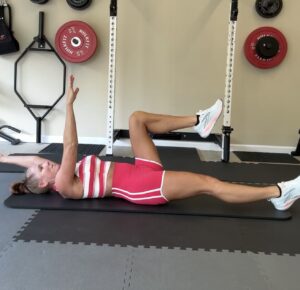
Dead Bug – Lie on your back with knees bent and lifted and arms toward the ceiling. Engage your core and slowly lower the opposite arm and leg while keeping your lower back supported. Repeat 10 times each side.
Pallof Press – Using a resistance band anchored at chest height, stand sideways to the anchor point. Hold the band at your chest and slowly press outward while resisting rotation. Repeat 10 times each side.
Remember: the goal isn’t to push through pain. Move slowly with control and discontinue any exercise that increases symptoms.
Low Back Pain After Sitting All Day?
If your back feels especially stiff after long periods of sitting, start with a few minutes of gentle mobility before moving into strengthening exercises. Hip flexor stretches, thoracic rotations, glute bridges, and sit-to-stands can help prepare your body for exercise and improve movement after prolonged sitting.
Tips to Avoid Making Pain Worse
- Move slowly and with control
- Avoid sharp or intense pain
- Stay consistent but don’t overdo it (Keep it simple. If it hurt’s, don’t do it)
*Lower back pain can cause problems elsewhere in the body. See my post on knee pain for more details.
PT Recommended Tools for Lower Back Support
- Amazon Basics Yoga Mat
- Wrist and Ankle Weights (for progression)
- Soft Lumbar Roll for Lower Back Support I have prescribed this lumbar roll many times to my patients.
- Resistance Bands
- Foam Roller
- Adjustable Dumbbells
🏡 Shop My PT-Approved Home Workout Essentials
The best home exercise program doesn’t require a room full of equipment. A few simple, versatile tools can make it easier to perform these beginner-friendly exercises safely and consistently. As a Doctor of Physical Therapy, I’ve curated my favorite home workout essentials that I personally use and recommend to support strength, mobility, and healthy movement at home.
As an Amazon Associate and Amazon Influencer, I earn from qualifying purchases. Thank you for supporting Total Body Wellness at no additional cost to you.
Additional PT Resources
If you spend much of your day sitting at a desk, you may also benefit from my Desk Ergonomics Checklist to help reduce unnecessary strain on your neck, shoulders, and back.
Looking to improve your posture? Read “How to Improve Your Posture After 40: A Physical Therapist’s Guide”
Want a stronger foundation? Read “Why Core Strength Matters After 40”
When to See a Healthcare Provider
Seek prompt medical attention if your back pain is accompanied by:
- Significant leg weakness
- Loss of bowel or bladder control
- Numbness in the groin or saddle area
- Fever, unexplained weight loss, or pain after a significant fall or accident
- Severe pain that doesn’t improve or progressively worsens
If your symptoms are persistent, interfere with daily activities, or you’re unsure which exercises are appropriate, consult your healthcare provider or a physical therapist for an individualized assessment.
This content is for educational purposes only and is not intended as medical advice. Consult a healthcare professional for personalized guidance.
Pingback: Knee Pain from Working Out? Do This Instead (Beginner Friendly & PT Approved) – Total Body Wellness
Pingback: How to Start Working Out Without Getting Injured (Beginner Guide & PT Approved) – Total Body Wellness
Pingback: Why Balance Training Matters After 40 (PT-Approved Guide) – Total Body Wellness
Pingback: Why Core Strength Matters After 40: More Than Just Abs – Total Body Wellness
Pingback: Core Exercises: How to Progress From Beginner to Advanced – Total Body Wellness