Introduction
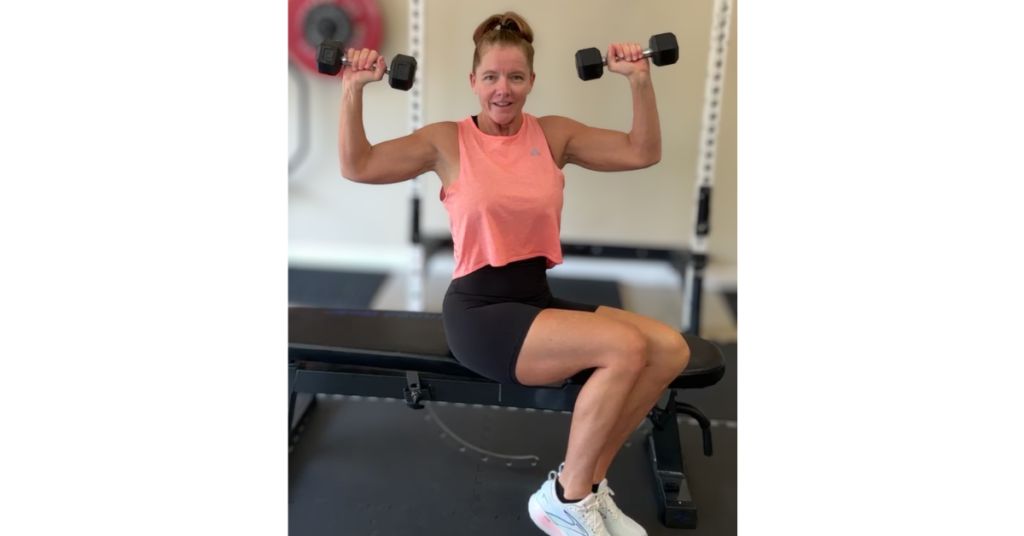
Have you noticed your shoulders rounding more than they used to? Maybe your head seems to drift forward when you’re looking at your phone, or you’ve started feeling stiffer through your neck and upper back after a long day. If so, you’re not alone.
Many adults notice changes in their posture as they get older. While aging naturally affects our muscles, joints, and spine, posture changes are often influenced by lifestyle habits as much as age itself. Spending hours at a desk, looking down at devices, reduced physical activity, and loss of muscle strength can all contribute to how we stand and move.
The encouraging news is that posture is not simply about “standing up straight.” Better posture comes from improving mobility, building strength, and creating movement habits that support your body throughout the day.
As a Doctor of Physical Therapy, I’ve worked with people of all ages experiencing neck pain, upper back stiffness, shoulder discomfort, and posture concerns. In this guide, I’ll explain why posture changes happen and share practical strategies that can help you move with greater comfort and confidence.
This post may contain affiliate links. As an Amazon Associate, I earn from qualifying purchases at no additional cost to you
Why Posture Changes After 40
Several factors can contribute to posture changes over time, and it’s usually not just one thing.
One of the biggest contributors is muscle weakness. The muscles that help support your head, shoulders, and spine naturally lose strength if they aren’t challenged regularly. This process, known as age-related muscle loss (sarcopenia), can begin gradually in midlife.
Another common factor is reduced mobility. Many of us spend long periods sitting at desks, driving, or looking down at phones and tablets. Over time, the muscles at the front of the chest may become tight while the muscles that help support the upper back become weaker. This combination often contributes to rounded shoulders and a forward head position.
Changes within the spine itself can also occur with aging. Some people develop increased rounding of the upper back (thoracic kyphosis), while others notice a fuller appearance near the base of the neck. These changes can have many contributing factors, including posture habits, muscle strength, spinal changes, osteoporosis, or other medical conditions.
Although we can’t stop the aging process, we can influence how well our muscles support our body and how comfortably we move each day.
Why “Sit Up Straight” Isn’t Enough
For decades, many of us were told to simply “sit up straight.” While good body awareness can be helpful, trying to hold one perfect posture all day usually isn’t realistic—or necessary.
Your body is designed to move. Even an ideal sitting position can become uncomfortable if you stay there for several hours without changing positions.
Rather than striving for perfect posture, focus on creating a supportive environment and moving regularly throughout the day. Standing up, stretching, walking, and changing positions are often more beneficial than trying to hold yourself rigidly upright.
One of my favorite reminders is:
The best posture is your next posture.
Changing positions throughout the day helps reduce prolonged stress on muscles and joints while encouraging healthy movement.
The Muscles That Help Support Good Posture
When people think about posture, they often picture the bones of the spine. In reality, your posture depends heavily on the muscles that support those bones.
The deep muscles in the neck help stabilize your head, while the muscles between your shoulder blades help maintain comfortable shoulder positioning. Your core and glute muscles provide additional support for your trunk and pelvis, creating a stable foundation for the rest of your body.
When these muscle groups become weak or deconditioned, maintaining an upright posture often feels more difficult—not because your body is “broken,” but because it has less muscular support.
This is one reason strength training becomes increasingly important as we get older. Building strength doesn’t just help with exercise—it supports everyday activities like walking, reaching, lifting, carrying groceries, and maintaining comfortable posture throughout the day.
5 PT Exercises That Support Better Posture
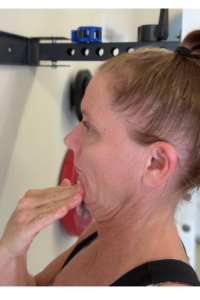
1. Chin Tucks
Chin tucks help strengthen the deep muscles at the front of the neck while encouraging better head positioning. Many people who spend time looking at computers or phones develop a forward head posture, placing additional stress on the muscles at the back of the neck.
A gentle chin tuck helps activate the muscles that support your head without forcing your neck into an exaggerated position.
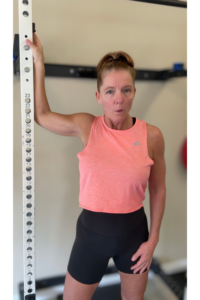
2. Doorway Pec Stretch
Tight chest muscles can contribute to rounded shoulders, especially after long periods of sitting.
Stretching the muscles across the front of your chest may improve shoulder mobility and make it easier to comfortably position your shoulders without feeling restricted.
Remember that stretching alone isn’t enough—you’ll get the best results by combining flexibility with strengthening exercises.
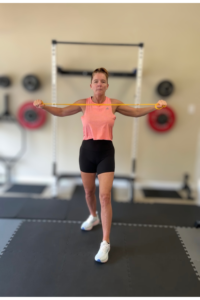
3. Resistance Band Pull-Aparts
This is one of my favorite exercises for improving upper back strength.
Band pull-aparts strengthen the muscles between your shoulder blades, which help support healthy shoulder positioning during daily activities. They also encourage controlled shoulder movement rather than simply pulling the shoulders backward.
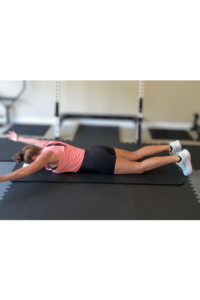
4. Prone Ys
The lower trapezius muscles are often overlooked but play an important role in supporting the shoulder blades.
Prone Ys help strengthen these muscles while encouraging coordinated shoulder movement. They can be challenging at first, so focus on quality of movement rather than lifting heavy weights.
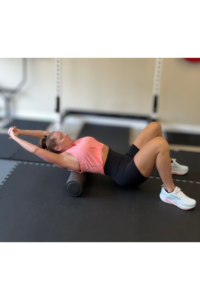
5. Thoracic Extension
The upper back (thoracic spine) naturally becomes less mobile over time, especially for people who spend much of the day sitting.
Thoracic extension exercises help encourage movement through the upper back, making everyday activities like reaching overhead, turning, and standing comfortably feel easier.
PT-Recommended Equipment for Better Posture
You don’t need an expensive home gym to improve your posture. A few simple pieces of equipment can make mobility exercises and strength training more comfortable and effective. These are the tools I personally recommend as a Doctor of Physical Therapy for improving upper back mobility, strengthening your postural muscles, and supporting long-term movement.
Resistance Bands
Resistance bands are one of my favorite tools for strengthening the muscles between your shoulder blades without placing excessive stress on your joints. They’re inexpensive, portable, and ideal for exercises like band pull-aparts, rows, and shoulder strengthening.
Foam Roller
If your upper back feels stiff after sitting at a desk, a foam roller can be a great addition to your routine. I often use one for gentle thoracic extension exercises to improve mobility before strengthening exercises.
Adjustable Dumbbells
Once your mobility improves, adding strength training can help your posture become easier to maintain. Adjustable dumbbells allow you to perform rows, overhead presses, lateral raises, farmer’s carries, and many other exercises without needing an entire rack of weights.
Exercise Mat
Many posture exercises, including open books, thread the needle, and core strengthening exercises, are more comfortable on a supportive exercise mat.
Stability Ball (Optional)
A stability ball can be useful for certain mobility and shoulder exercises, including supported shoulder flexion and gentle core exercises. While it’s not essential, it can add variety to your home exercise routine.
My Personal Favorites
If you’re just getting started, these are the three pieces of equipment I recommend most often:
⭐ Resistance bands
⭐ Foam roller
⭐ Adjustable dumbbells
With these three tools, you can perform many of the exercises featured in this guide and build a simple, effective home routine.
Daily Habits Matter More Than Perfect Posture
The exercises above are valuable, but they work best when combined with healthy daily habits.
Simple changes can make a meaningful difference:
- Change positions every 30–60 minutes.
- Take short walking breaks throughout the day.
- Strength train at least two to three times per week.
- Include regular mobility exercises for your neck, shoulders, and upper back.
- Create a workstation that supports comfortable positioning.
If you spend long hours at a desk, be sure to read my Desk Ergonomics Checklist for practical workstation tips that complement these posture strategies.
Build Strength to Support Better Posture
Good posture isn’t about perfection—it’s about having a body that’s strong enough to support the activities you enjoy.
Strength training helps maintain muscle mass, supports joint health, improves balance, and makes everyday movement feel easier. Combined with regular mobility work and movement breaks, it provides a strong foundation for healthy posture throughout life.
If you’re just getting started, check out my article on Why Strength Matters After 40 and my Core Strength Guide for additional tips and beginner-friendly exercises.
The “Strong & Active After 40” program was created from a physical therapy perspective to help you move better, build strength, improve stability, and support long-term mobility. This beginner-friendly video guided system combines practical exercises and recovery strategies into one structured program that can be followed at your own pace.
Final Thoughts
Posture changes don’t happen overnight, and improving posture doesn’t happen overnight either. Instead of trying to force yourself into one perfect position, focus on building strength, improving mobility, and moving more throughout your day.
Small, consistent habits often produce the biggest long-term results.
Whether you’re working at a desk, exercising, or simply enjoying everyday life, your goal isn’t perfect posture—it’s a body that moves well, feels strong, and supports you for years to come.
Pingback: Best Exercises for Lower Back Pain (Beginner Friendly & Physical Therapist Approved) – Total Body Wellness
Pingback: Why Balance Training Matters After 40 (PT-Approved Guide) – Total Body Wellness
Pingback: 10 PT-Approved Home Safety Tips to Help Prevent Falls – Total Body Wellness