Shoulder pain when reaching overhead, sleeping, or reaching behind your back? Learn common causes, PT-approved exercises, mobility tips, and when to seek medical care.
This post may contain affiliate links. That means I may earn a small commission if you purchase through these links, at no additional cost to you. I only recommend products and tools that I personally use, trust, or believe may help support your strength, mobility, and wellness goals.
Introduction
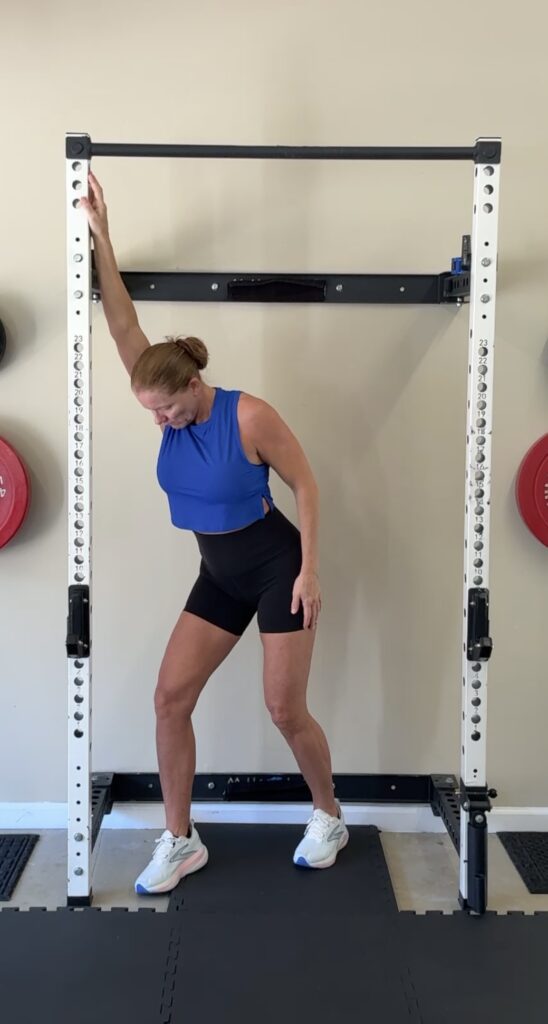
Imagine reaching into a kitchen cabinet and feeling a sharp pinch in your shoulder. Or maybe rolling onto your side at night wakes you up with shoulder pain. Perhaps fastening your bra, reaching into your back pocket, or washing your hair has become more difficult than it used to be.
These are some of the most common shoulder complaints I treated during my years in outpatient physical therapy.
The good news is that shoulder pain doesn’t always mean you’ve seriously injured your shoulder. In many cases, improving mobility, strength, posture, and movement patterns can make everyday activities more comfortable.
In this guide, we’ll discuss common reasons shoulders become painful, simple self-checks, PT-approved exercises, and practical strategies to help you move with greater confidence.
In This Guide
- Why Shoulder Pain Is So Common
- Why Does Your Shoulder Hurt Reaching Overhead?
- Why Does Your Shoulder Hurt Sleeping on Your Side?
- Why Does Reaching Behind Your Back Hurt?
- Rounded Shoulders? It Might Not Be Just Tight Muscles
- One Shoulder Tighter Than the Other?
- PT-Approved Shoulder Exercises
- Shoulder Recovery Essentials
- When to See a Medical Professional
- PT Tip
- FAQs
- Final Thoughts
Why Shoulder Pain Is So Common
Before we jump into exercises, it’s helpful to understand something important:
Your shoulder doesn’t work alone.
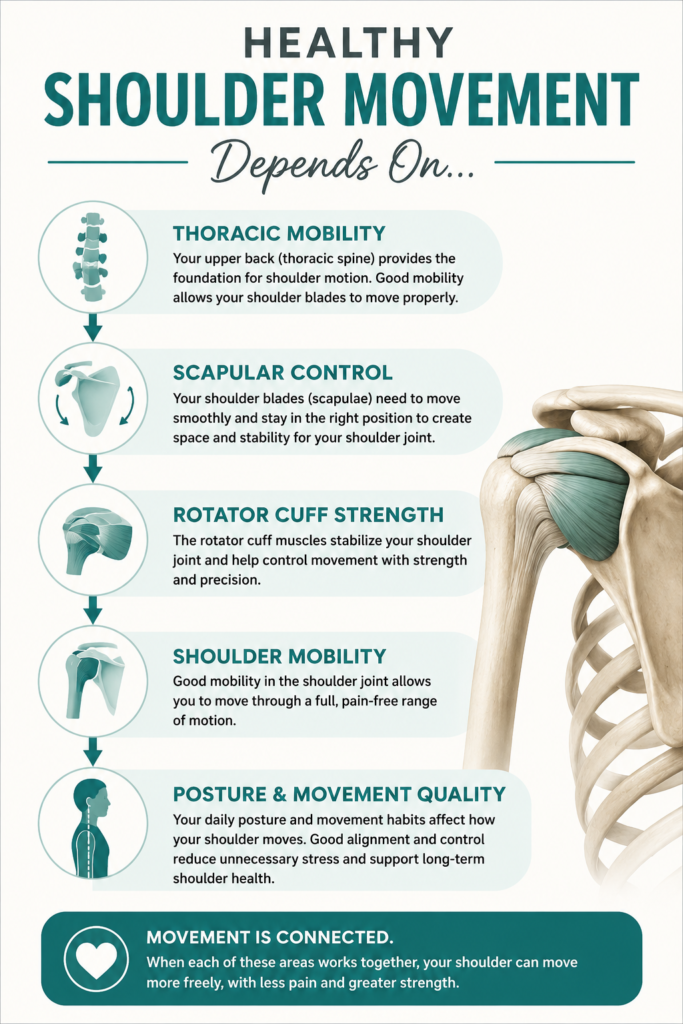
Comfortable shoulder movement depends on several areas working together, including:
- Shoulder joint mobility
- Rotator cuff strength
- Shoulder blade (scapular) control
- Upper back (thoracic spine) mobility
- Chest flexibility
- Core stability
When one area isn’t moving or functioning well, another often has to compensate.
As a physical therapist, I rarely looked at the shoulder in isolation. I evaluated how the entire upper body moved because improving only one piece of the puzzle often isn’t enough.
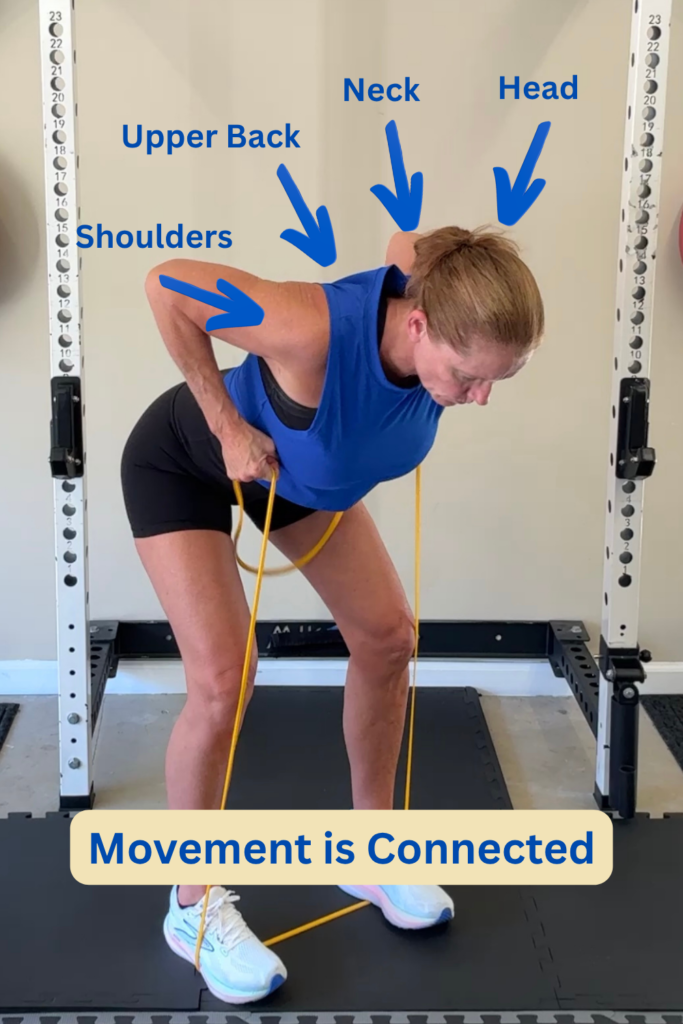
💙 PT Insight “Shoulder pain doesn’t always start at the shoulder. Good physical therapists evaluate how the neck, upper back, shoulder blade, and shoulder work together because movement is connected.”
Why Does Your Shoulder Hurt Reaching Overhead?
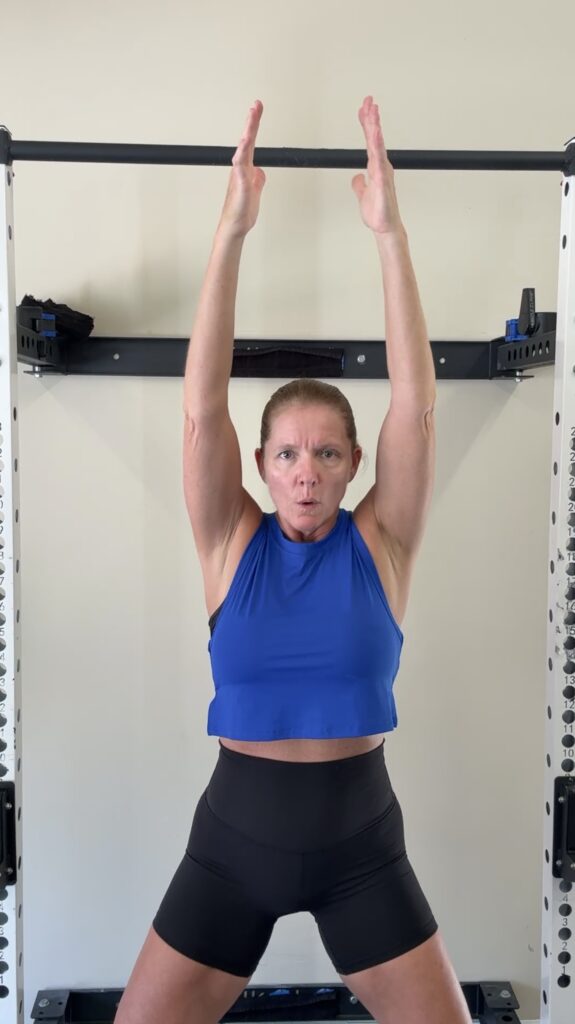
Reaching overhead is something most of us do without thinking—until it becomes painful.
You may notice discomfort when:
- Putting dishes away
- Washing or styling your hair
- Reaching into a closet
- Hanging clothes
- Placing luggage in an overhead compartment
- Reaching for something on a high shelf
Several factors can contribute to pain with overhead reaching. The shoulder is designed to move through a large range of motion, but that movement depends on the shoulder joint, shoulder blade, upper back, and surrounding muscles working together.
1. Limited Upper Back Mobility
Your thoracic spine (upper back) plays an important role in overhead movement. If your upper back becomes stiff, your shoulder blade may not move as efficiently, causing other structures around the shoulder to work harder.
2. Poor Posture and Shoulder Position
Posture doesn’t directly “cause” shoulder pain, but prolonged rounded shoulder posture can influence how your shoulder blade and upper arm bone move during overhead activities.
When the shoulders sit more forward and the upper back becomes rounded, it may change the position and movement of the shoulder blade (scapula). In some individuals, this can reduce the space available for comfortable shoulder movement and increase irritation of tissues around the shoulder joint.
This is one reason addressing posture, upper back mobility, and shoulder blade control can be an important part of improving shoulder comfort.
3. Limited Shoulder Mobility
A shoulder that doesn’t move well may cause your body to compensate by shrugging, arching your back, or changing your movement pattern during overhead activities.
4. Weak Rotator Cuff and Shoulder Blade Muscles
The rotator cuff and muscles surrounding the shoulder blade help guide and stabilize the shoulder during movement. If these muscles aren’t working efficiently, overhead activities may feel more difficult or uncomfortable.
⚠️ Common Mistake Many people focus only on stretching the shoulder. If your upper back is stiff or your shoulder blade isn’t moving well, stretching alone may not solve the problem.
Why Does Your Shoulder Hurt Sleeping on Your Side?
Shoulder pain at night is one of the most frustrating complaints because it interferes with quality sleep and recovery.
Several factors may contribute:
- Prolonged pressure on the shoulder
- Poor sleeping position
- Shoulder inflammation
- Weak supporting muscles
- Limited shoulder mobility
PT Tips
- Hug a pillow to support your upper arm.
- Avoid sleeping directly on the painful shoulder if possible.
- Place a pillow under your arm to reduce strain.
😴 Sleep Tip Try hugging a pillow or placing one under your upper arm to reduce stress on the shoulder while you sleep.
Why Does Reaching Behind Your Back Hurt?
This movement often becomes difficult before people notice pain reaching overhead.
Common examples include:
- Fastening a bra
- Tucking in a shirt
- Reaching into a back pocket
- Personal hygiene after using the restroom
- Putting on a jacket
This motion requires a combination of shoulder mobility, upper back movement, and rotator cuff function.

Rounded Shoulders? It Might Not Be Just Tight Muscles
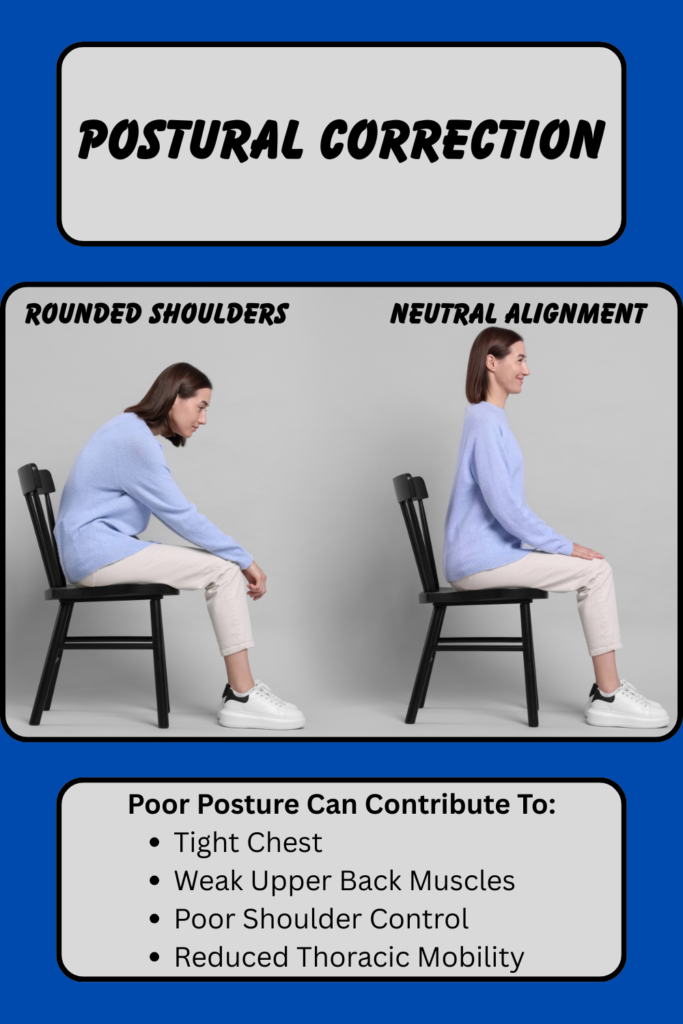
Many people assume poor posture is caused only by tight chest muscles.
While tight pectoral muscles can contribute, rounded shoulders are often influenced by a combination of:
- Tight chest muscles
- Weak upper back muscles
- Reduced thoracic mobility
- Poor shoulder blade control
Improving posture usually requires strengthening as well as stretching.
💡 Did You Know? Rounded shoulders aren’t always caused by tight chest muscles. Weak upper back muscles and reduced shoulder blade control often play an important role, too.
One Shoulder Tighter Than the Other?
Your shoulders don’t have to move exactly the same, but a noticeable difference in mobility or comfort can be a clue that something deserves attention.
Compare both sides by slowly raising your arms overhead and reaching behind your back.
Pay attention to:
- Pain
- Stiffness
- Compensations like shrugging
- Differences in range of motion
If one shoulder consistently feels much different than the other, it’s worth addressing early before it begins affecting daily activities.
PT-Approved Shoulder Exercises
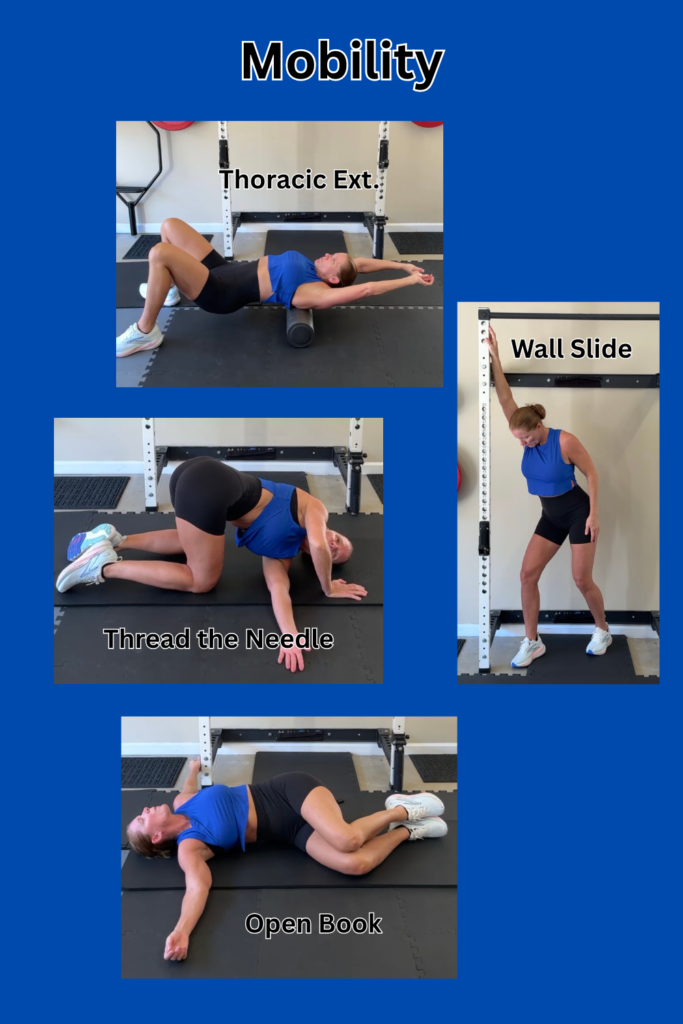
Mobility
- Thoracic extension over a foam roller
- Open books
- Thread the needle
- Wall slides
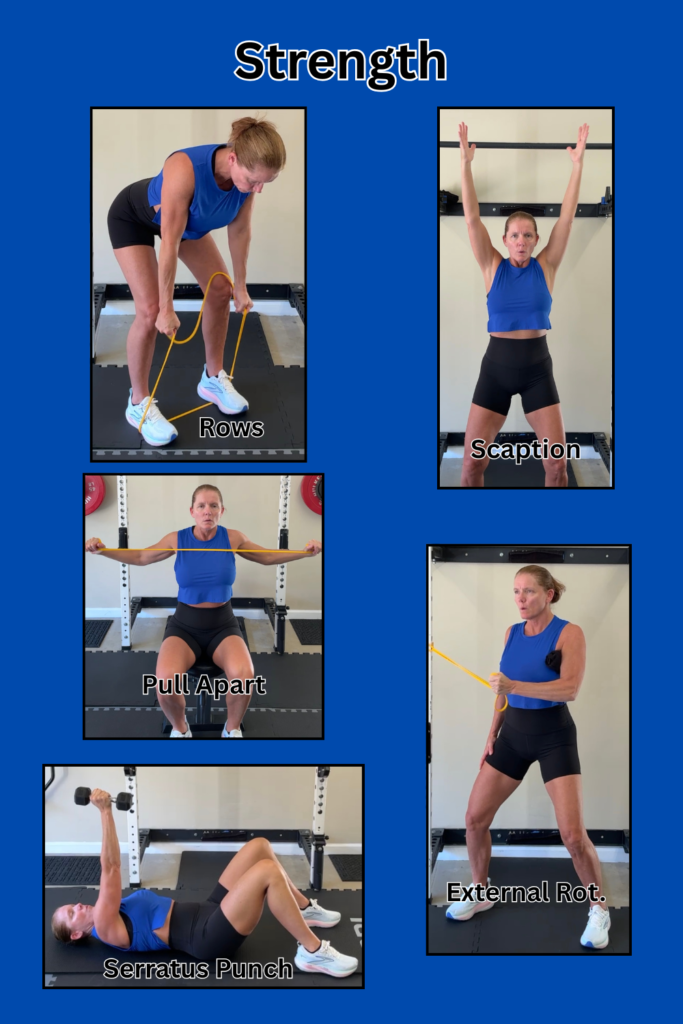
Strength
- Resistance band rows
- Band pull-aparts
- External rotation
- Scaption raises
- Serratus punches
Start with slow, controlled movements and stop if an exercise significantly increases your pain.
✔️ Consistency Beats Intensity Performing a few quality exercises several times each week is usually more beneficial than doing a long workout once in a while.
PT-Approved Shoulder Recovery & Exercise Equipment
The good news is that improving shoulder mobility and strength doesn’t require a room full of equipment. A few well-chosen tools can support a wide variety of PT-approved exercises, making it easier to build strength, improve mobility, and stay consistent with your routine at home.
As a physical therapist, these are some of the tools I frequently recommend because they can be used for mobility, strengthening, posture, and overall shoulder health.
This post may contain affiliate links. I may earn a commission if you purchase through links on this page, at no additional cost to you. I only recommend products I personally use, trust, or believe may benefit my readers.
When Should You See a Medical Professional?
While many cases of shoulder discomfort improve with appropriate exercise and activity modification, it’s important to seek medical evaluation if you experience:
- Sudden inability to raise your arm
- Significant weakness
- Pain after a fall or traumatic injury
- Persistent night pain that doesn’t improve
- Numbness or tingling into the arm or hand
- Shoulder pain that continues to worsen despite rest and exercise
Early evaluation can help identify the underlying cause and guide the most appropriate treatment.
💙 PT Tip
One of the first things I learned as a physical therapist is to look above and below the area that “hurts”—not just at the painful area itself.
While shoulder pain can certainly come from the shoulder, it’s not always the only contributor.
For example, limitations in the upper back, shoulder blade movement, posture, or even the neck (cervical spine) can sometimes influence how the shoulder feels and functions. That’s why a thorough evaluation looks at how the entire upper body moves together rather than focusing on one structure alone.
As physical therapists, we don’t simply ask, “Where does it hurt?” We also ask, “Why is this movement painful?”
Finding and addressing the underlying movement problem often leads to better long-term results than treating symptoms alone.
FAQs About Shoulder pain:
Reaching overhead requires your shoulder joint, shoulder blade, upper back, and rotator cuff muscles to work together. Pain may be related to limited mobility, muscle weakness, altered movement patterns, posture, or irritation of the tissues around the shoulder. A physical therapist can help determine which factors may be contributing.
Poor posture doesn’t automatically cause shoulder pain, but rounded shoulders and a stiff upper back can change how the shoulder blade moves during overhead activities. Improving posture, thoracic mobility, and shoulder strength may help improve movement and reduce discomfort.
Sleeping on your side places prolonged pressure on the shoulder. Using a pillow to support your upper arm or adjusting your sleeping position may reduce stress on the shoulder joint.
Reaching behind your back requires shoulder mobility, rotator cuff function, shoulder blade movement, and upper back mobility. Stiffness or weakness in any of these areas can make the movement uncomfortable.
Yes. In some cases, pain that feels like it is coming from the shoulder may actually be influenced by the cervical spine (neck). Because movement is connected, physical therapists evaluate the neck, upper back, and shoulder together when appropriate to identify all potential contributors to pain.
It depends on the cause of your pain. Gentle, pain-free exercises often help improve mobility and strength, but exercises should be selected based on your symptoms and movement limitations. If your pain is severe, follows an injury, or continues to worsen, consult a healthcare professional.
Many shoulder exercises require only a few basic tools, such as resistance bands, a foam roller, light dumbbells, and a yoga mat. These simple pieces of equipment can support both mobility and strengthening exercises at home.
Final Thoughts
Shoulder pain can make everyday activities feel frustrating, but it doesn’t always mean you have to stop moving. Understanding how the shoulder, upper back, chest, and surrounding muscles work together can help you make smarter decisions about exercise and recovery.
Whether your discomfort shows up when reaching overhead, sleeping on your side, or reaching behind your back, addressing mobility, strength, posture, and movement quality is often the best place to start.
Building healthier movement habits today can help you stay active and independent for years to come.
Remember: movement is connected. The shoulder rarely works in isolation, and neither should your exercise program. Building strength, improving mobility, and moving with better control can help you stay active and confident for years to come. Start your journey with my 7-Day Beginner Strength, Stability & Recovery Reset.
Keep Learning With the PT Resources
If you found this article helpful, you may also enjoy:
Learn why recovery is an essential part of rehabilitation and how to know when your body needs rest before progressing your exercises.
Learn why a strong core supports not only your lower back but also posture, shoulder mechanics, and everyday movement.
Discover why strength training is one of the best ways to maintain muscle, improve joint health, and stay active as you age.
See the PT-approved equipment I recommend most for building strength and improving mobility at home.