This post may contain affiliate links. As an Amazon Associate, I earn from qualifying purchases at no additional cost to you. I only recommend products and resources that I genuinely use, trust, or believe may be helpful to my readers.
As we age, many people focus on strength, weight loss, or cardiovascular health. While these are all important, one area that is often overlooked is balance.
The truth is that balance plays a critical role in how we move, exercise, and perform everyday activities. Improving your balance can help you stay active, reduce your risk of falls, and maintain independence as you get older.
As a physical therapist, I encourage adults over 40 to include balance exercises as part of a well-rounded fitness routine.
While balance can feel like a simple physical skill, it actually depends on several systems working together in the body.
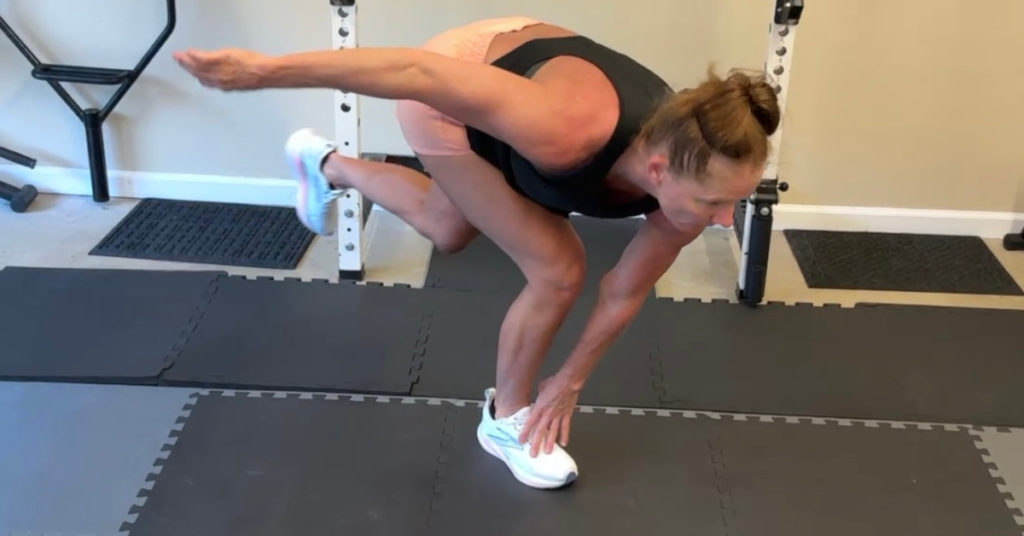
Balance Is More Than Strength: The 3 Systems You Rely On Every Day
Balance isn’t just about strong legs or a strong core. Balance depends on three sensory systems gathering information and your muscles responding quickly enough to keep you upright..
When one of these systems is not working as efficiently, your body has to compensate—and that’s when people often start to feel unsteady or less confident with movement.
1. Vision (Visual System) 👀
Your eyes help your brain understand your position in space and what’s happening around you. Vision provides constant feedback about your environment, helping you adjust to surfaces, obstacles, and movement.
When vision input is reduced or challenged, you may notice:
- Feeling less steady in low light
- More hesitation on uneven surfaces
- Relying more on other senses to feel stable
2. Inner Ear (Vestibular System) 👂
Your inner ear helps detect head position, movement, and changes in direction. It plays a key role in keeping you oriented when you turn, bend, or change speed.
When this system is challenged, people may experience:
- Dizziness or lightheadedness
- Feeling “off balance” with quick movements
- Difficulty stabilizing during turns or position changes
3. Body Awareness (Proprioceptive System) 🦶
Proprioception is your body’s ability to sense where it is in space. Specialized sensors in your feet, ankles, joints, and muscles constantly send information to your brain about position, pressure, and movement.
This system helps you:
- Adjust automatically to uneven surfaces
- Know where your feet are without looking
- Maintain stability during walking, stepping, and shifting weight
When proprioception is reduced, balance may feel less automatic or less controlled.
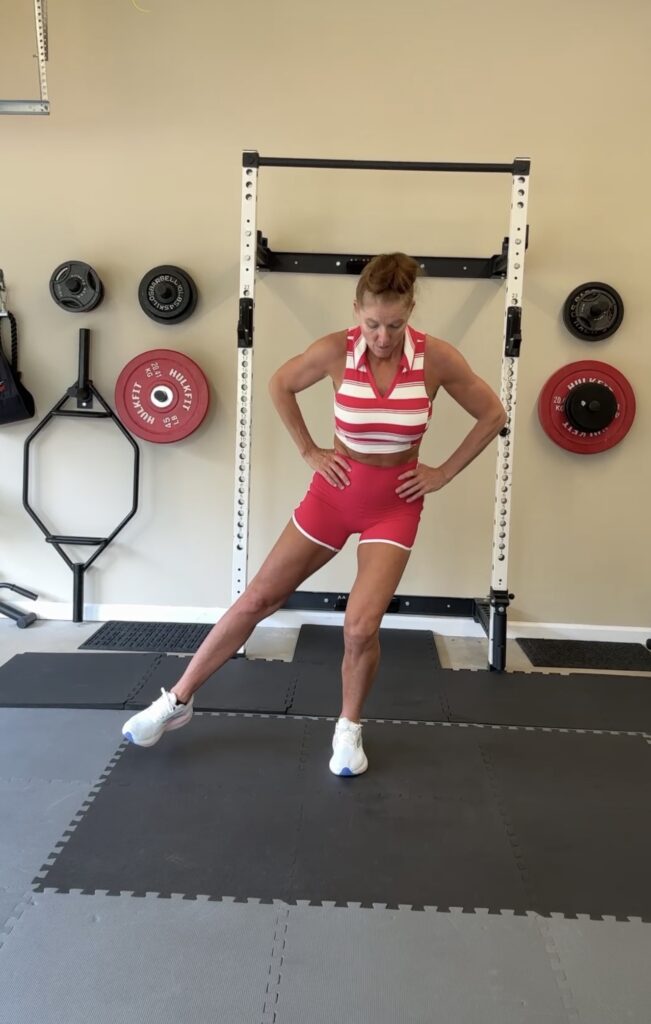
Why This Matters
Balance depends on all three systems working together. If one system is not working as efficiently, the others have to compensate—which can make movement feel less stable or more effortful.
The good news is that balance is trainable at any age. Exercises that challenge stability, coordination, strength, and body awareness can help improve confidence and reduce that “unsteady” feeling over time.
How Your Body Keeps You Upright
Most people think balance means standing perfectly still, but that’s not actually how balance works.
Even when you’re standing quietly, your body is constantly making tiny adjustments to keep your center of gravity over your feet. Physical therapists describe three primary balance strategies your body uses to help prevent a fall.
1. Ankle Strategy
When you experience a small sway, your ankles make tiny adjustments to bring your body back to center.
You use this strategy when:
- Standing in line
- Brushing your teeth
- Waiting at the grocery store
2. Hip Strategy
When the movement becomes larger or you’re standing on a softer or uneven surface, your hips help make bigger corrections.
You use this strategy when:
- Reaching into a cabinet
- Standing on grass or sand
- Leaning outside your base of support
3. Stepping Strategy
If your center of gravity moves too far outside your base of support, your body takes a quick step to prevent a fall.
This is your body’s last line of defense before losing balance.
The good news?
Just like strength and endurance, all three balance strategies can improve with practice
Balance Is Also About Reaction Time
Good balance isn’t about standing perfectly still.
It’s about recognizing a loss of balance and responding quickly enough to recover.
That’s why balance training often includes movements that challenge your coordination, reaction time, and confidence—not just your ability to stand on one leg.
Benefits of Balance Training
1. Helps Reduce Fall Risk
Falls are one of the leading causes of injury among older adults. Improving balance can help you react more quickly to changes in terrain, slips, trips, and unexpected movements.
2. Improves Stability and Confidence
Many people become less active because they feel unsteady or worry about falling. Balance training can help build confidence and make daily activities feel easier and safer.
3. Supports Strength and Mobility
Balance and strength work together. Many balance exercises also engage the muscles of the legs, core, and hips, helping improve overall function and movement quality.
As a physical therapist, I often encourage adults to combine balance exercises with regular strength training. Together, they can help improve stability, confidence, mobility, and overall function. If you’re not currently strength training, I recommend starting with my article Why Strength Training Matters After 40.
4. Enhances Everyday Activities
Good balance helps you enjoy everyday life.
Good balance can make it easier to:
- Walk on uneven ground
- Garden
- Travel
- Carry groceries
- Climb stairs
- Put on your shoes while standing
- Play with your children or grandchildren
5. Promotes Healthy Aging
Maintaining balance is an important part of staying active and independent as you age. Small improvements today can help support long-term mobility and quality of life.
Everyday Signs Your Balance May Need Some Attention
You don’t have to experience a fall before working on your balance.
Some early signs include:
- Holding onto the counter while putting on your shoes
- Feeling less steady on uneven ground
- Needing the handrail more often on stairs
- Catching yourself after an occasional trip
- Feeling less confident carrying groceries
- Avoiding uneven sidewalks or hiking trails
These changes don’t automatically mean something is wrong, but they can be a good reminder that balance is a skill worth practicing.
Try This Simple Balance Check
Stand near a sturdy counter or wall for safety.
Lift one foot off the floor and see if you can comfortably maintain your balance for 10 seconds on each side.
A small amount of movement is completely normal. Your body is constantly making tiny adjustments to keep you balanced.
If you notice significant wobbling, repeatedly reaching for support, or a noticeable difference between sides, consider adding balance exercises to your weekly routine.
Simple Balance Exercises to Try
If you’re new to balance training, start with these beginner-friendly exercises:
Single-Leg Stand
Stand near a sturdy surface for support if needed. Lift one foot off the ground and hold for 10–30 seconds. Repeat on both sides.
Tandem Stance
Place one foot directly in front of the other as if standing on a tightrope. Hold for 20–30 seconds.
Heel-to-Toe Walk
Walk in a straight line, placing the heel of one foot directly in front of the toes of the other foot.
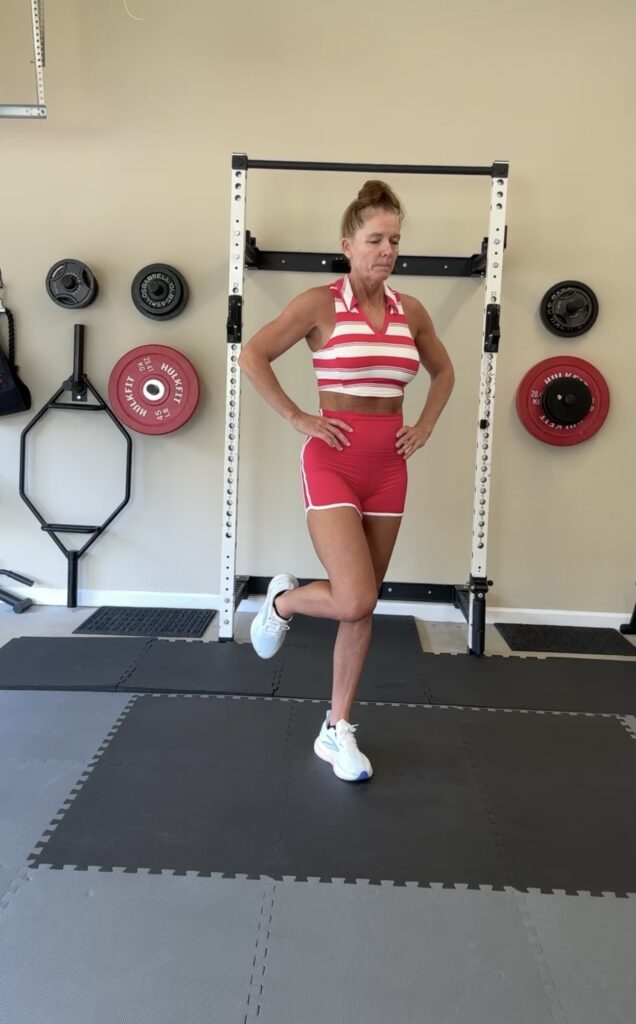
Standing March
Slowly lift one knee at a time while maintaining good posture and control.
PT-Recommended Balance Equipment(Optional)
Balance training can be done with just your body weight, but certain tools can add variety and challenge as your strength and stability improve.
These are optional tools I often recommend for clients who want to progress their balance training at home:
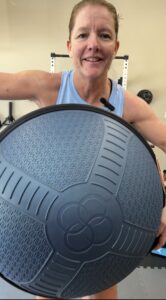
✔ BOSU Sport Balance Trainer
This balance trainer can improve balance and agility, build core strength and stability, body awareness and coordination.
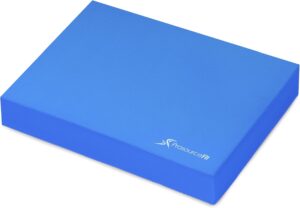
✔ Balance Pad or Foam Pad
A balance pad creates a slightly unstable surface that challenges your body’s proprioception (body awareness) and encourages the small muscles in your feet, ankles, and legs to work harder. As your balance improves, it provides a simple way to safely progress many beginner balance exercises at home.
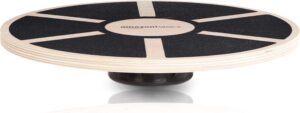
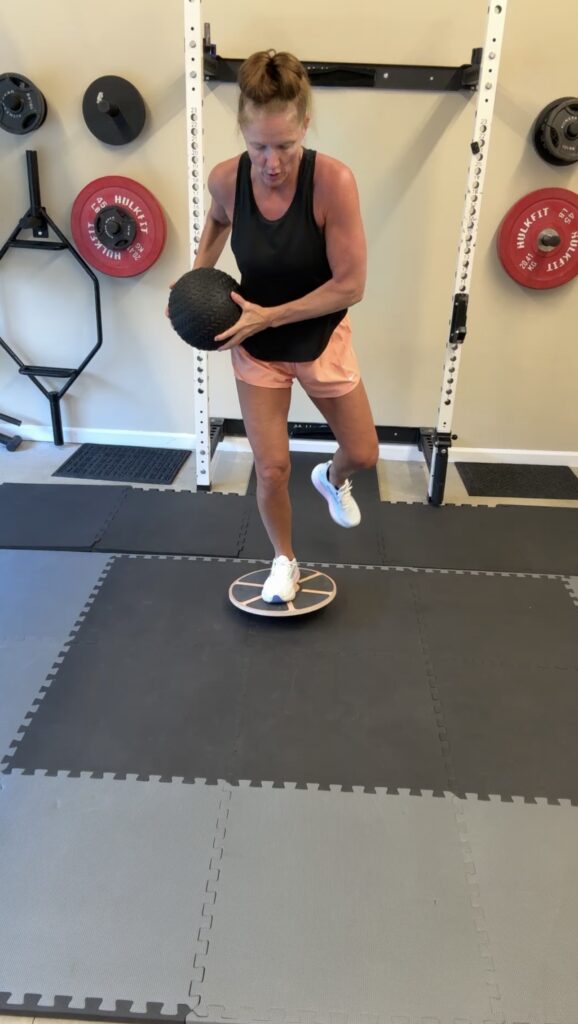
✔ Wobble Board / Balance Board
A wobble board introduces controlled instability, helping improve ankle stability, coordination, and reaction time. It can be a great progression for individuals who already feel comfortable with basic balance exercises and want to further challenge their balance.
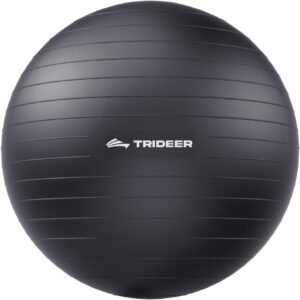
✔ Stability Ball
A stability ball can be used for core strengthening, posture exercises, and improving trunk stability. Because your body must constantly make small adjustments while using the ball, it also helps reinforce balance and body awareness during exercise.
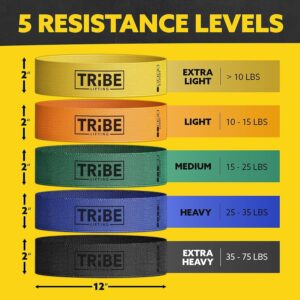
✔ Mini Resistance Bands
Strong hips and glutes play an important role in maintaining balance during walking, climbing stairs, and standing on one leg. Mini resistance bands are an easy way to strengthen these muscles and improve lower-body stability while adding variety to your workouts.
💡 PT Tips
You don’t need special equipment to improve your balance. Walking, standing on one leg, and practicing simple balance exercises can all make a meaningful difference. As your balance improves, adding tools like a balance pad or resistance bands can provide new challenges and help you continue progressing safely.
Continue Your Healthy Aging Journey
Balance is just one piece of staying active and moving confidently after 40. These additional Physical Therapist-approved resources can help you improve posture, reduce aches and pains, and build strength for everyday life.
PT Guide to Better Posture After 40
Good posture isn’t about sitting or standing perfectly straight all day—it’s about building the strength and mobility to support your body during everyday activities. Learn simple exercises and practical tips to improve posture, reduce stiffness, and move more comfortably.
➡ Read: PT Guide to Better Posture After 40
Free Desk Ergonomics Checklist
If you spend hours sitting at a computer, your workstation could be contributing to neck, shoulder, and back discomfort. Download my free Desk Ergonomics Checklist to learn simple adjustments that can help improve comfort while working.
➡ Download: Free Desk Ergonomics Checklist
Best Walking Shoes for Knee Pain
Supportive footwear doesn’t just benefit your knees—it can also improve comfort, stability, and confidence while walking. If you’re looking for a new pair of walking shoes, explore my Physical Therapist-approved recommendations to help you find the right fit.
➡ Read: Best Walking Shoes for Knee Pain
Bonus suggestion
Since you’ve created a nice “standing” series recently, I would also add your low back article.
Beginner-Friendly Lower Back Exercises
If your lower back feels tired after standing for long periods, improving core strength, glute strength, and movement endurance can often help. This guide includes beginner-friendly exercises and practical tips to support a healthier, stronger back.
➡ Read: Beginner-Friendly Lower Back Exercises
Final Thoughts
Strength, mobility, and cardiovascular fitness are all important, but don’t overlook balance.
By incorporating simple balance exercises into your routine, you can improve stability, build confidence, and support healthy aging for years to come.
Looking for more PT-approved fitness and wellness tips? Follow along for exercise ideas, recovery strategies, and practical ways to stay active after 40.
Looking for a simple plan to put these concepts into practice? Check out my 7-Day Beginner Strength & Recovery Reset, where you’ll find beginner-friendly workouts, mobility exercises, and recovery strategies designed to help you build strength, improve movement, and create sustainable wellness habits.
You don’t need a full gym to improve your balance and strength. If you’re building a home fitness routine, my Best Home Workout Equipment for Beginners guide can help you choose simple, PT-approved tools to get started.
Pingback: Mobility vs. Flexibility: What’s the Difference and Why Does It Matter After 40? – Total Body Wellness
Pingback: 10 PT-Approved Home Safety Tips to Help Prevent Falls – Total Body Wellness