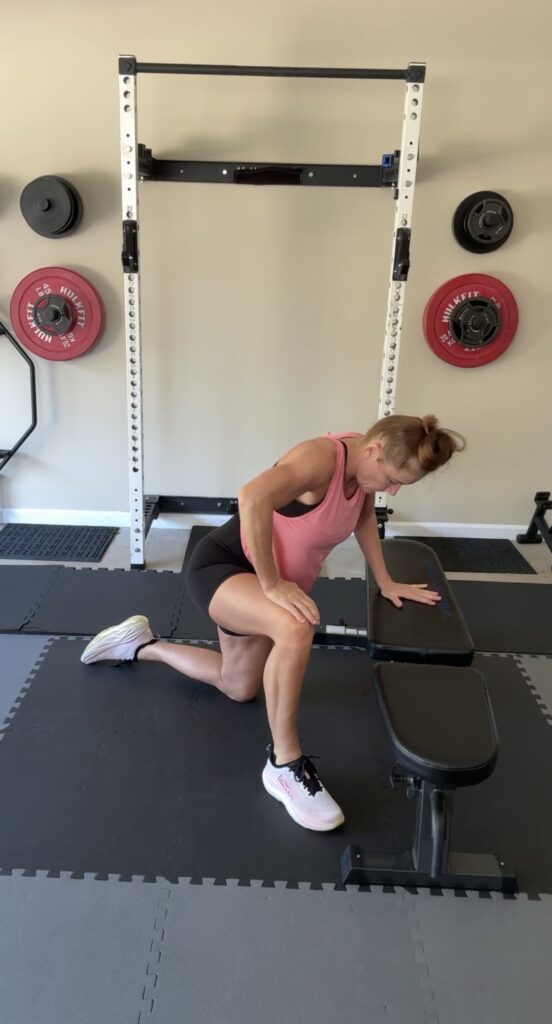
Have you noticed that getting up from the floor doesn’t feel as easy as it used to?
Maybe you find yourself using your hands more, needing to roll onto your knees first, or avoiding getting down on the floor altogether because you are not sure how you will get back up.
You are not alone.
Many adults over 40 begin noticing changes in their ability to move from the floor to standing. The good news? Difficulty getting up from the floor is not simply a sign that you are “getting older.” It is often a reflection of changes in strength, mobility, balance, and confidence — all things that can improve with the right exercises and practice.
As a Doctor of Physical Therapy with nearly 25 years of experience helping people improve movement, I want to show you why this movement becomes harder, how to safely get back up from the floor, and the exercises that can help you rebuild the strength and mobility needed for everyday life.
As a licensed DPT and Amazon Associate, I earn from qualifying purchases at no extra cost to you. I only recommend products I’ve personally vetted.
Why Does Getting Up From the Floor Get Harder?
Getting up from the floor requires your body to combine several important skills:
- Leg strength
- Hip mobility
- Core stability
- Balance
- Coordination
- Confidence with movement
If any one of these areas declines, getting up from the floor can become more challenging.
1. Lower Body Strength Changes
Standing up from the floor requires your quadriceps, glutes, and hamstrings to generate enough force to lift your body weight.
Your glute muscles especially play a major role in hip extension — the movement needed to transition from sitting or kneeling to standing.
When these muscles become weaker, everyday movements like:
- Standing from a low chair
- Climbing stairs
- Getting out of the car
- Rising from the floor
can become more difficult.
The good news? Strength can improve at any age when you train consistently.
2. Hip Mobility Can Limit Your Movement
Your hips need enough mobility to allow you to move through different positions comfortably.
Many adults spend hours sitting, which can contribute to:
- Tight hip flexors
- Reduced hip rotation
- Difficulty getting into a deep squat or kneeling position
Limited hip mobility can make floor transfers feel stiff, awkward, or uncomfortable.
3. Balance and Stability Matter
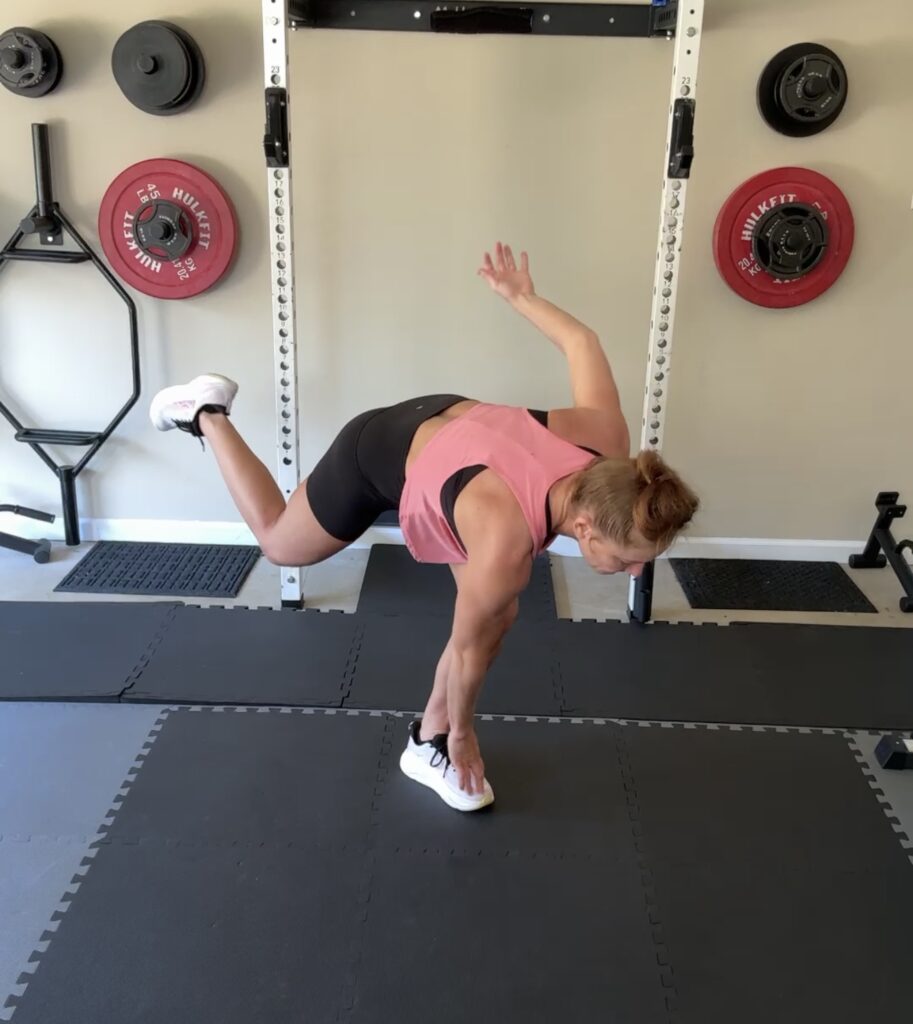
Getting up from the floor is not just about strength.
You also need balance and body control as you transition through different positions.
This includes the ability to:
- Shift your weight safely
- Control your movement
- Stabilize through one leg
- Feel confident during the transition
Improving balance is one of the best ways to maintain independence as you age.
First: What Should You Do If You Fall?
Before we talk about exercises, let’s talk about something important.
Falls happen. Even strong, active people can lose their balance.
If you fall, the first step is not to immediately try to jump back up.
Instead:
1. Take a Moment
Pause and make sure you are not seriously injured.
Check for:
- Severe pain
- Dizziness
- Head injury symptoms
- Inability to move a body part normally
If you feel injured, seek help rather than forcing yourself up.
2. Roll Onto Your Side
If you are able, slowly roll onto your side.
This gives you a safer position to begin moving.
3. Move Into a Hands-and-Knees Position
Use your arms and legs to transition onto your hands and knees.
From here, you have more control and stability.
4. Move Toward a Stable Surface
Crawl or move toward a sturdy chair, couch, or other stable object.
Avoid pulling yourself up on something that can move.
5. Use a Half-Kneeling Position to Stand
Place one foot forward into a half-kneeling position.
Use your legs and arms together to push yourself up to standing.
Practicing this movement before you need it can help build confidence and reduce fear.
Exercises That Make Getting Up From the Floor Easier
The best way to improve floor transfers is to train the exact skills your body needs:
- Strong legs
- Strong hips
- A stable core
- Better balance
- More comfortable movement transitions
Here are some of my favorite physical therapist-approved exercises.
1. Sit-to-Stand
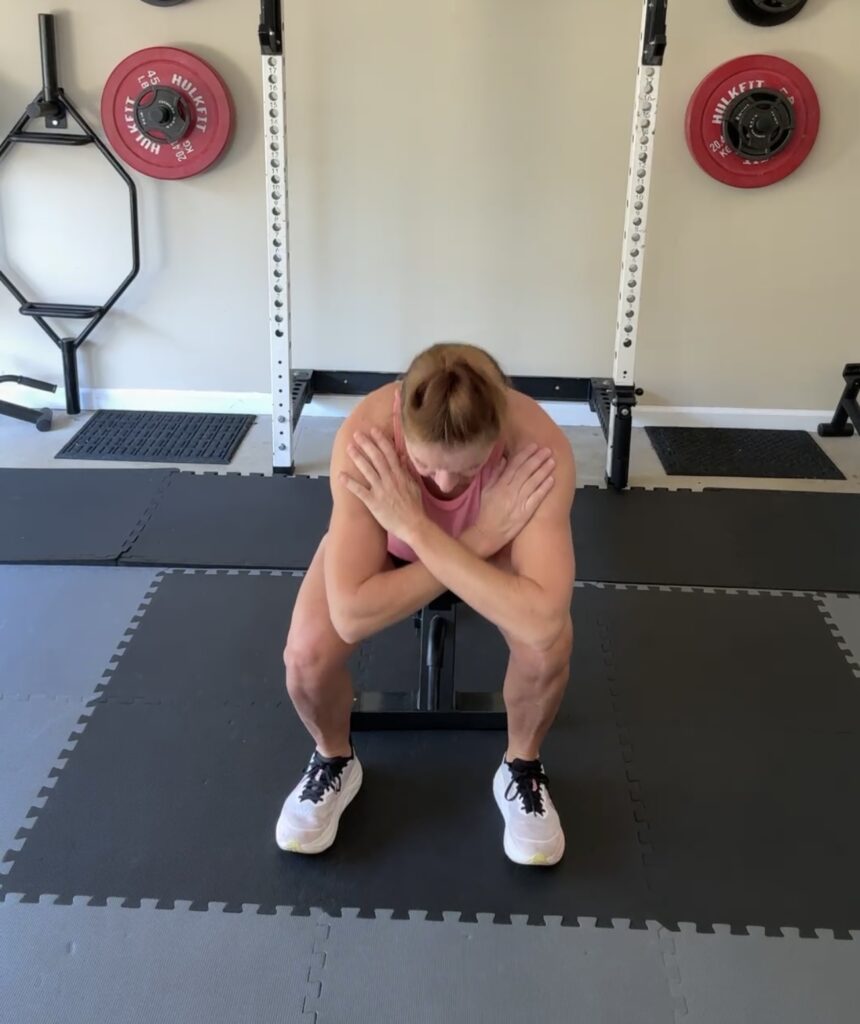
Sit-to-stands are one of the best exercises for building the strength needed to rise from the floor.
How to perform:
- Sit toward the front of a sturdy chair.
- Place your feet underneath your knees.
- Lean slightly forward. (nose over toes)
- Push through your feet and stand tall.
- Slowly lower back down with control.
PT Tip:
Avoid using your arms if possible. Your goal is to teach your legs to do the work.
Start with:
2-3 sets of 8-12 repetitions
Click this link to learn about the sit to stand test, how to perform it, and where you fall on the norms scale to determine if you are at a higher risk of falls.
2. Glute Bridges
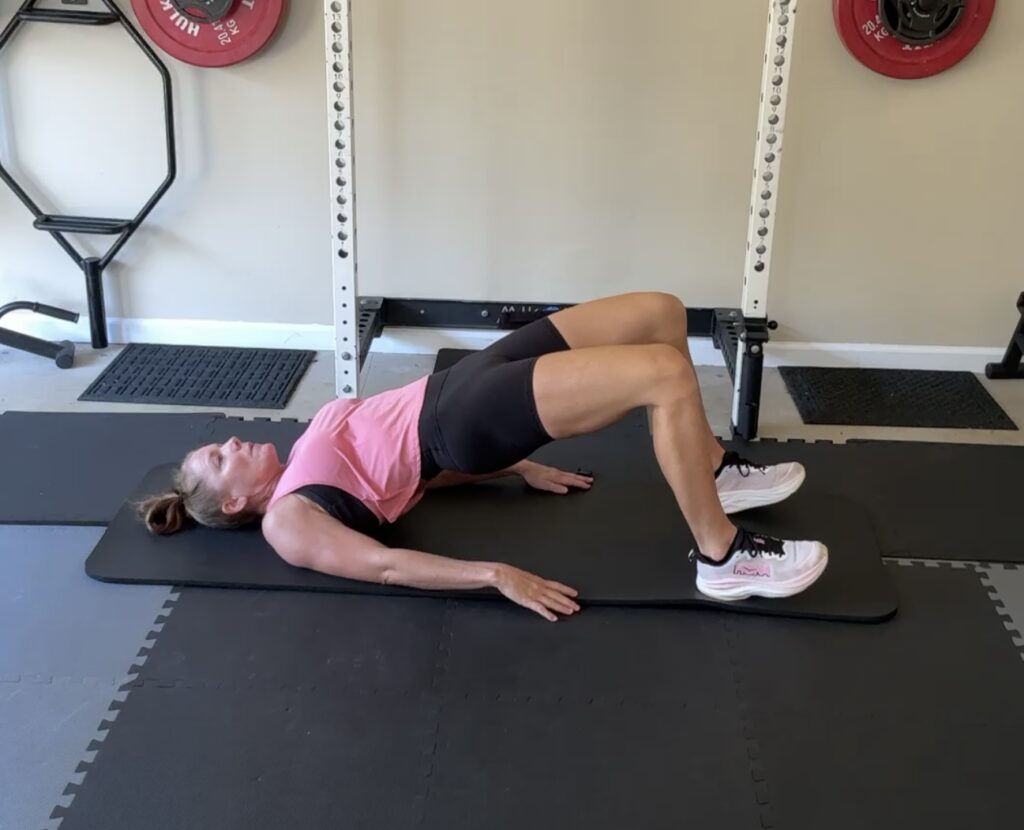
Strong glutes are essential for moving from the floor to standing.
How to perform:
- Lie on your back with your knees bent.
- Tighten your abdominal muscles.
- Squeeze your glutes and lift your hips.
- Lower slowly with control.
PT Tip:
Think about pushing through your heels and squeezing your glutes rather than arching your low back.
Perform:
2-3 sets of 10-15 repetitions
3. Dead Bug
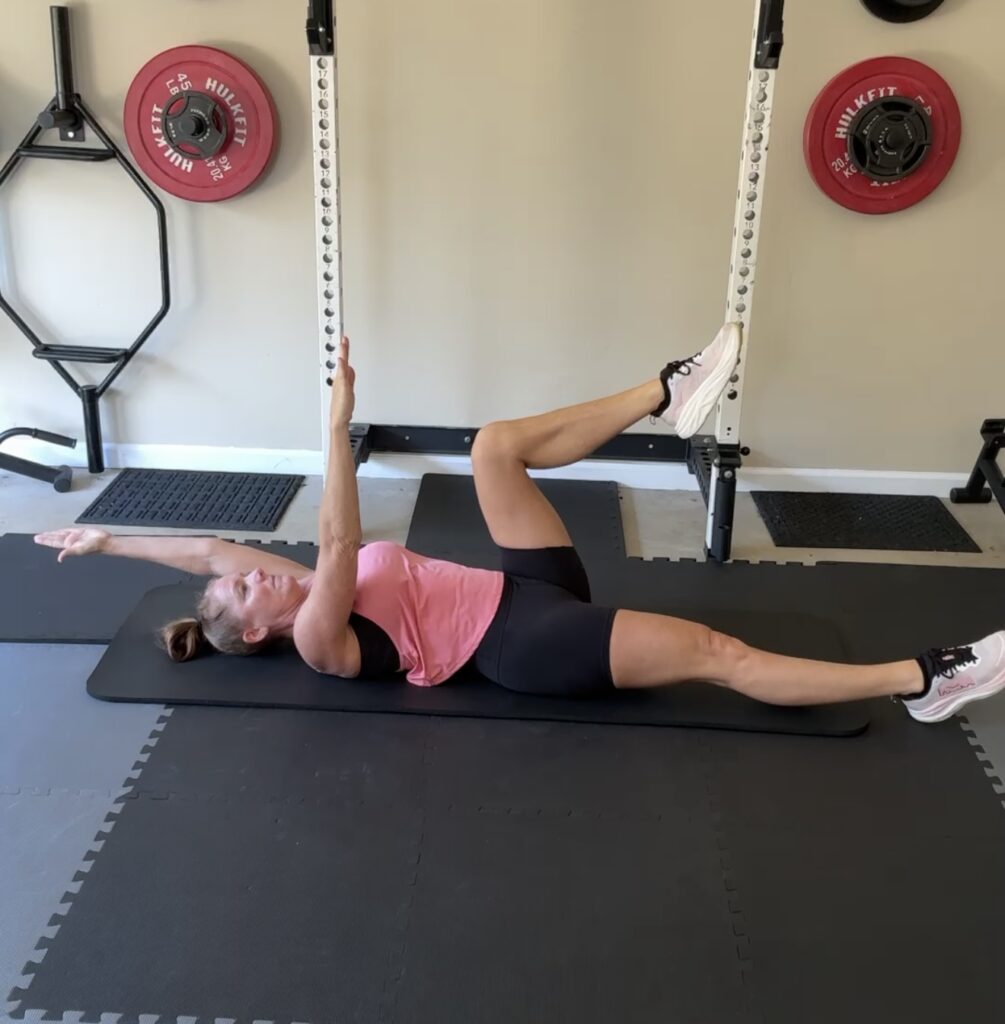
A strong core helps control your body during transitions.
How to perform:
- Lie on your back with your arms reaching toward the ceiling.
- Bring your hips and knees to a 90-degree position.
- Slowly lower one arm overhead and the opposite leg.
- Return to the starting position and switch sides.
PT Tip:
Your low back should stay gently supported against the floor. Quality matters more than speed.
Perform:
2-3 sets of 8-10 repetitions per side
4. Bird Dog
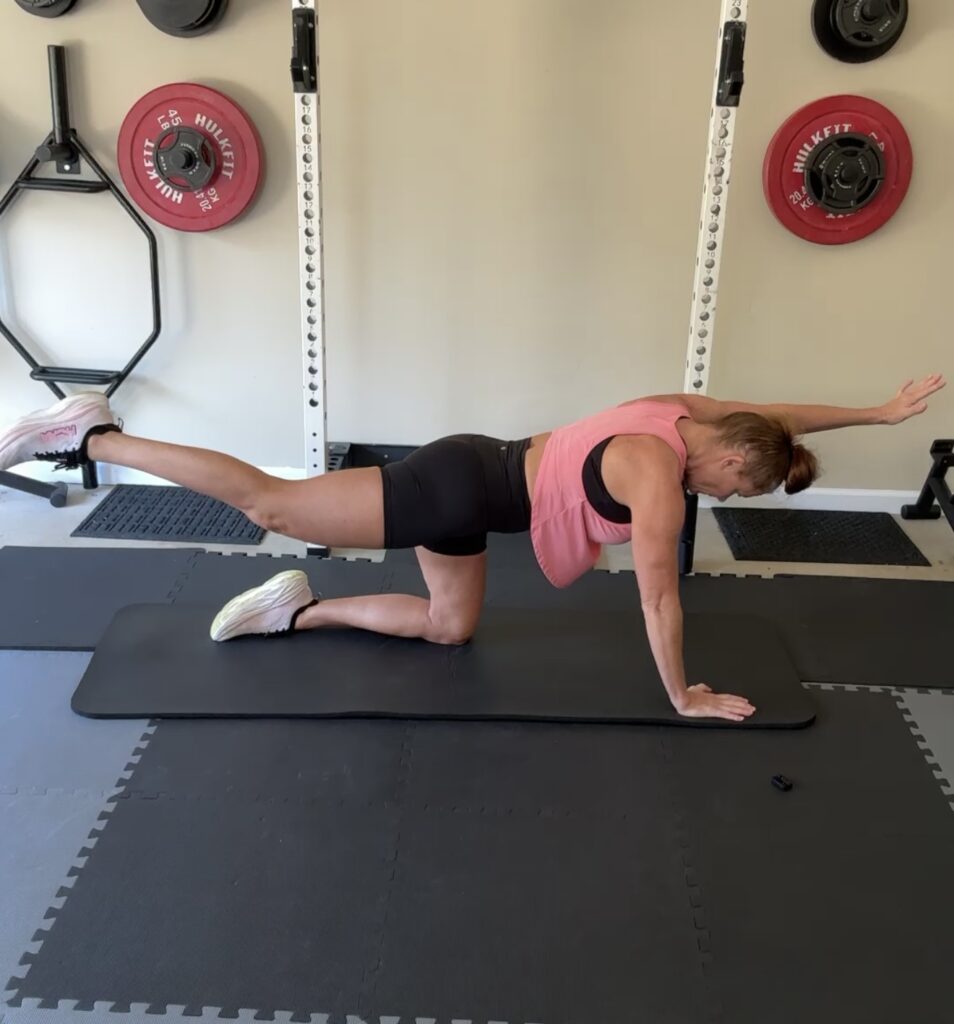
Bird dogs improve core stability, balance, and coordination.
How to perform:
- Start on your hands and knees.
- Brace your core.
- Extend one arm and the opposite leg.
- Hold briefly before returning.
PT Tip:
Imagine balancing a glass of water on your back. Avoid twisting or shifting your hips.
Perform:
2-3 sets of 8-10 repetitions per side
5. Half-Kneeling to Standing Practice
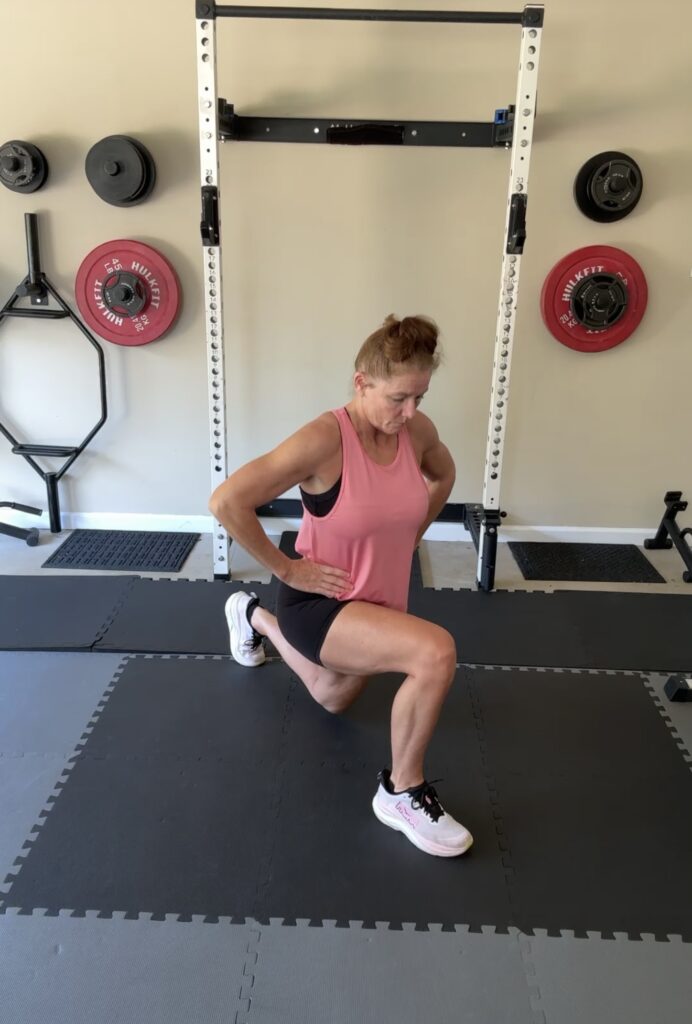
This exercise directly trains the movement pattern needed to get up from the floor.
How to perform:
- Start in a half-kneeling position.
- Place one foot forward.
- Push through your front foot and stand.
- Slowly return back down.
PT Tip:
Use a stable surface for support when first practicing.
Practice:
5 repetitions per side
6. Hip Mobility: 90/90 Hip Rotation Stretch
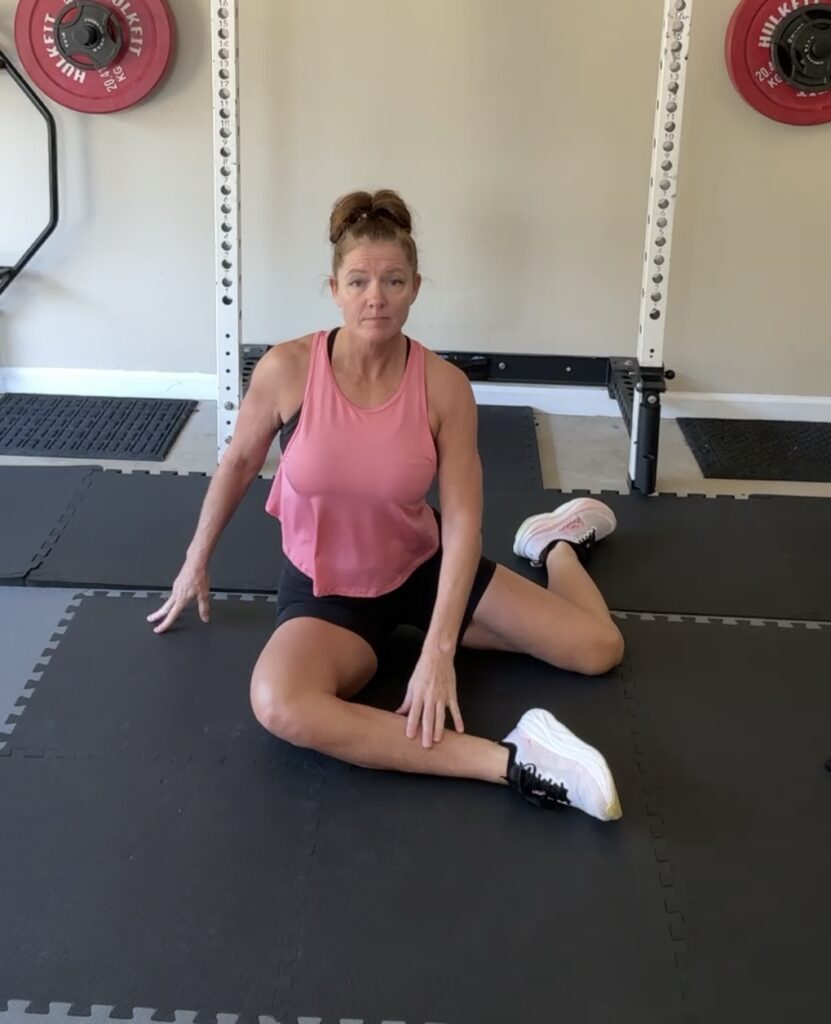
Hip rotation is often overlooked but extremely important for comfortable floor movement.
How to perform:
- Sit in a 90/90 position with both knees bent.
- Keep your chest tall.
- Rotate gently toward each side.
- Move slowly and breathe.
PT Tip:
Do not force the stretch. The goal is controlled mobility, not maximum range.
Hold:
20-30 seconds per side
💪 Shop My PT-Approved Strength & Stability Essentials
Building the strength and stability needed to get up from the floor doesn’t require a gym full of equipment. A few versatile tools can help you safely improve lower-body strength, core stability, balance, and confidence with everyday movement. As a Doctor of Physical Therapy, I’ve curated these strength and stability essentials based on the equipment I personally use and recommend for building functional strength at home.
As an Amazon Associate and Amazon Influencer, I earn from qualifying purchases. Thank you for supporting Total Body Wellness at no additional cost to you.
How Strong Are Your Legs? Try the 30-Second Sit-to-Stand Test
One of my favorite ways to assess lower-body strength, muscular endurance, balance, functional mobility, and screen for fall risk is the 30-Second Sit-to-Stand Test.
As a physical therapist, I like this test because it reflects skills you use every day—standing up from a chair, climbing stairs, and getting up from the floor. It can also help identify changes in strength and mobility that may contribute to an increased risk of falls.
How to Perform the Test
- Sit in a standard chair (about 17 inches high) without armrests.
- Cross your arms over your chest.
- Stand up and sit down as many times as you can in 30 seconds.
- Count only the repetitions completed with good form.
If you need to use your hands for support, that’s okay—it simply means you’re identifying an area where strength can improve.
What Does Your Score Mean?
| Age | Women | Men |
|---|---|---|
| 60–64 | 12–17 | 14–19 |
| 65–69 | 11–16 | 12–18 |
| 70–74 | 10–15 | 12–17 |
| 75–79 | 10–15 | 11–17 |
| 80–84 | 9–14 | 10–15 |
| 85–89 | 8–13 | 8–14 |
How to Interpret Your Results
If you are 60 or older, compare your score to the age-based reference values above.
If you are under 60, don’t worry if you don’t have an age-specific norm. Instead, use your score as a personal baseline.
Ask yourself:
- Can I complete the test without using my hands?
- Does my form stay consistent from beginning to end?
- Do I feel steady while standing?
- Does one leg feel weaker than the other?
- Can I improve my score over the next 4–6 weeks?
Tracking your progress over time is often more meaningful than comparing yourself to someone else. As your strength, endurance, and balance improve, everyday activities—like climbing stairs, getting up from the floor, and carrying groceries—should begin to feel easier.
💡 PT Insight: Don’t wait until age 60 to start paying attention to functional strength. I encourage many of my patients in their 40s and 50s to use the 30-Second Sit-to-Stand Test as a personal benchmark. Even without age-specific norms, tracking your own progress over time can help you identify changes early and stay strong, mobile, and independent for years to come.
Practice Before You Need It
One of the biggest mistakes people make is waiting until something becomes difficult before training it.
If you stop getting on the floor because it feels challenging, your body loses practice with that movement.
Instead, try incorporating floor transitions into your routine:
- Stretch on the floor
- Practice getting down and back up safely
- Perform core exercises on the floor
- Play with grandchildren
- Work on mobility exercises
Movement confidence comes from practice.
Your Ability To Move Is Something You Can Train
Getting up from the floor is more than just a fitness test.
It represents:
- Independence
- Confidence
- Strength
- The ability to participate in the activities you enjoy
Aging does not mean you have to accept losing these abilities.
With consistent strength training, mobility work, and balance practice, you can continue improving how your body moves.
Start small. Stay consistent. Build confidence.
Your future self will thank you.
Want to Improve Your Strength, Mobility & Confidence?
Getting up from the floor is a great example of how your body’s strength, mobility, balance, and coordination work together.
But improving this movement is not about one single exercise. It is about building a strong foundation that supports everything you do — from walking and climbing stairs to playing with your grandchildren and staying active as you age.
If you are working on improving your movement after 40, these physical therapist-guided resources can help:
Build Strength for Everyday Life
Why Strength Training Matters After 40: How to Stay Strong, Independent & Active
Strength is one of the most important factors for maintaining independence as we age. Learn why resistance training becomes even more important after 40 and how to safely build strength at home.
Strengthen Your Core for Better Movement
Why Core Strength Matters: The Key to Protecting Your Back & Improving Daily Movement
Your core is not just about having visible abs. A strong core helps with balance, stability, posture, and controlling movements like bending, lifting, and getting up from the floor.
Improve Hip Mobility & Reduce Stiffness
Mobility vs Flexibility: What’s the Difference & Why It Matters After 40
Stiff hips can make everyday movements feel harder. Learn why mobility — the ability to actively control your movement — is essential for staying strong and moving confidently
Protect Your Knees While Building Strength
Knee Pain From Working Out? What Your Body May Be Telling You
If knee discomfort is limiting your workouts, the answer may not be avoiding exercise. Learn how to modify movements and strengthen the muscles that support your knees.
Improve Your Walking & Overall Fitness
Walking After 40: Simple Ways to Get Better Results Without Running
Walking is one of the best forms of low-impact exercise, but small changes can help improve strength, endurance, and overall fitness.
Recover Better & Train Smarter
Why Recovery Matters After 40: How Rest Helps You Get Stronger
Progress does not happen only during workouts. Recovery allows your body to adapt, rebuild, and continue improving.
Ready for More Support?
If you want a simple, physical therapist-designed plan to improve strength, stability, and confidence at home, check out my:
This beginner-friendly program includes guided workouts designed to help you build strength safely and consistently.
Your ability to move confidently is something you can continue improving at any age. The goal is not perfection — it is building strength, mobility, and confidence so you can keep doing the activities you love.
Ready to Build Strength, Stability & Confidence After 40?
Improving your ability to get up from the floor is about more than one movement. It is about building the strength, mobility, balance, and confidence needed for everyday life.
That is exactly why I created:
Strong & Active After 40 | PT-Designed Mobility, Strength, Stability & Recovery System
This physical therapist-designed program is built for adults who want to:
- Improve strength safely at home
- Move with less stiffness and more confidence
- Improve balance and stability
- Support healthy joints through smart exercise
- Build a consistent routine that fits real life
Inside the program, you will find guided workouts and strategies designed to help you create a stronger foundation for the activities you enjoy — whether that means walking, traveling, playing with family, or simply feeling more capable in your everyday movements.
You do not have to accept feeling weaker or less mobile as you get older.
Start building the strength and confidence your future self deserves.
🚶 Shop My PT-Approved Walking & Low-Impact Cardio Essentials
Being able to get up from the floor is an important sign of functional strength and mobility, but maintaining these abilities requires consistent movement practice. Walking and low-impact cardio are excellent ways to build endurance, support overall fitness, and stay active as you age.
As a Doctor of Physical Therapy, I recommend choosing activities and equipment that help you move consistently and confidently. I have curated my Amazon Storefront with walking shoes, low-impact cardio equipment, and fitness essentials that I personally use and recommend to support an active lifestyle.
As an Amazon Associate and Amazon Influencer, I earn from qualifying purchases. Thank you for supporting Total Body Wellness at no additional cost to you.